Feeds:
Posts
Comments

Archive for the ‘Real Estate’ Category

State Rep. Kam Buckner listens as fellow state Rep. Eva-Dina Delgado answers questions while meeting with a House committee on a transit funding plan during the legislative session at the Illinois Capitol on Oct. 29, 2025, in Springfield. (John J. Kim/Chicago Tribune)

By David Greising | For the Chicago Tribune

Late last year, just days before a historic transit bill finally passed and went to Gov. JB Pritzker’s desk, it was loaded with controversial ideas.

But before the final up-or-down vote, proposals for statewide taxes on package deliveries, streaming services and even event tickets were tossed aside. Instead, the lawmakers raised the Regional Transportation Authority sales tax, hiked tolls on the Illinois Tollway and pulled in $200 million from the state’s road fund — which notably is intended for capital projects, not operations.

Today, we’re on to a different topic with yet another set of substantive last-minute changes. What started as a push to keep the Chicago Bears in Illinois has morphed into the so-called megaprojects bill, which could institutionalize negotiated tax breaks statewide for everything from the proposed One Central mixed-use development spanning DuSable Lake Shore Drive to new development around the quantum computing park along the lakefront.

Don’t count out data centers, either. They’re excluded from eligibility for now, but the industry is powerful, the potential for huge investment is appealing and legislative negotiations are far from complete.

Under the version of the megaprojects bill that the House passed this week, developers of projects costing at least $100 million could lock in privately negotiated tax cuts — so-called payments in lieu of taxes (PILOT) — for as long as 25 years. Projects worth $500 million could be eligible for 30-year agreements, and developments worth $1 billion would allow for 40 years of tax cuts guaranteed by cities, school districts and other taxing authorities.

At the center of the legislative trading that consumed Springfield this week was Chicago state Rep. Kam Buckner, D-Chicago, who also was at the center of last fall’s transit talks. Buckner has an eye for a deal. His last-minute, mixmaster approach to closing out the transit negotiations irritated several participants, but the end result was a fiscally responsible and transformative restructuring of mass transit in northern Illinois.

The stakes are high again this time. And as happens in Illinois too often, the legislature could well pass a momentous bill — one that could shift hundreds of millions of dollars in tax burden from megaproject investors to their neighbors and even the state — without serious study of the knock-on impacts on property owners, local governments and the state budget.

The broader fiscal consequences for the state, and for homeowners, businesses and others, in a bill now in front of the Senate, are as mysterious as the ideas in it are bold.

At the heart of the matter is a simple fact: It takes a certain amount of money to run a government, and someone needs to pay the bills. If a megaproject developer negotiates a 40-year tax break with the local school district, let’s say, then all the other taxpayers in that district have to make up the difference.

Buckner and others pushing for the megaprojects bill would seek to creatively mitigate the direct impact on ordinary taxpayers. Only half of the PILOT revenues would go toward property tax relief — of that, property tax rebates for neighbors of the project would account for 60%, and 40% would be deposited into the state’s existing property tax relief fund.

It’s a formulation Buckner unveiled just one day before the bill went to a House vote, with little study and just light debate.

But guess what? The PILOT funds that would cover those property tax rebates are dollars that otherwise would go toward the schools, roads, buildings and services that the taxing bodies still must pay for. One way or another, homeowners, business owners and other taxpayers will need to cover the gap.

Not to worry, the megaprojects bill backers say. Property values in the areas surrounding megaprojects will increase and property tax revenues along with them. But that’s hardly guaranteed.

Stadiums are notorious for their lack of multiplier impact, which is one reason these days why sports team owners, such as the McCaskey family that controls the Bears, have such a hard time hoodwinking governments into giving them direct subsidies to build their stadiums. And some megaprojects could even lead to decreased property values nearby. If data centers eventually are included, for example, neighbors could take a hit due to impacts on electricity costs, water access, industrial noise and other nuisances that can come into play when a megaproject moves in next door.

Despite the lack of information about the net cost or benefit of proposals considered in the megaprojects bill debate, the rush is on in Springfield. Buckner showed his talent for dealmaking this week and got a 78-32 House vote — momentum that will carry into the Senate.

And that legislative momentum could make it all the harder for Buckner and his colleagues in the Senate, who now must consider their own version, to do the right thing and consider a pause — for the long-term good of the state.

That’s right: Perhaps the megaprojects bill should stop right here, at least for now. There are too many open and unanswered questions to responsibly pass such a consequential law in such a rush.

The Bears are insisting on action now, or they just might move to Indiana. The General Assembly could deal with that risk, before the traditional May 31 close of the spring session, and table the broader megaprojects effort until the fall veto.

Preposterous? A deal is within reach, after all. But something quite similar happened with the transit restructuring last year, and the state, the northern Illinois transit system, and public transit users and taxpayers are better for it.

The alternate approach of passing a bill based on incomplete information and hoping for the best has had disastrous consequences in the past. The state’s pension systems are a fiscal disaster and national disgrace in part because “reforms” were passed with woefully incomplete analysis of their consequences.

No doubt Buckner and others have deal fever, and a successful Senate vote could be within sight. After all, the megaprojects idea has been under discussion, with Pritzker’s encouragement, for three years now, so the temptation is understandable. But the right course would be to address the Bears matter now — and use the time between today and year’s end to get the rest of the megaprojects bill right.

David Greising is president of the Better Government Association.

Source

Read Full Post »

More than two months ago we posted, “Pritzker to propose statewide zoning laws to spur homebuilding, limit local control.” Shortly thereafter, local community leaders almost universally voiced their opposition to Pritzker’s plan to diminish local control and property values via his “BUILD,” plans.

Needless to say, we were dumbfounded when an email was forwarded to us with the subject line, “Call For Action: Support the BUILD Plan to Increase Inventory.” That message was sent by, “North Shore-Barrington Association of Realtors (NSBAR).” Since most recognize the reputation (many) realtors have, suffice it to say consider the source as we continue…

The NSBAR message begins with, “Please contact your legislator and tell them to support the BUILD Plan to increase housing inventory and ease housing costs for Illinois families.” State Rep. Martin McLaughlin has not been shy in voicing his opposition to Pritzker’s land grab plans stating, “It’s just a bad idea.”

The NSBAR pitch states the BUILD plan will, “Eliminate local housing bans.” One does not need to read further, but those wishing to can do so here.

All we can advise is when buying or selling a home, choose your representative and attorney wisely.

Related:Village of Barrington President shares perspectives on Pritzker’s BUILD plans,” “(Ignoring public opinion) Pritzker says of BUILD Plan for homes would not cost taxpayers,” “Gov. JB Pritzker’s ambitious housing plan for Illinois: More four-flats, looser rules,” “Pritzker to propose statewide zoning laws to spur homebuilding, limit local control,” “McLaughlin’s press conference video recording regarding Pritzker’s proposed municipal zoning powers grab posted,” “It’s just a bad idea’: Suburban officials oppose Pritzker’s plan to reduce local control over residential It’s just zoning

Read Full Post »

The lease on the BCFPD fire station adjacent to Village Hall is being reviewed according to their agenda. | Courtesy Google maps

The Barrington Countryside Fire Protection District (BCFPD) Board of Trustees meets this evening at 6:30 PM at 22222 N. Pepper Road in Lake Barrington. Topics on their agenda include:

  • Station 37 (Barrington Hills) Lease Review
  • Local Incident Management Assistance Team (IMAT) (Type IV) Memorandum of Understanding

A copy of their agenda can be viewed here.

Read Full Post »

Mike Moran, Village of Barrington President

“Barrington has always taken a thoughtful and balanced approach to growth, preserving the character of our neighborhoods while planning responsibly for the future. With that in mind, I am writing to share serious concerns and urge opposition to House Bill (HB) 5626, known as the BUILD legislation. View the full text of the bill and its status here.

This proposal would override local zoning and require municipalities like Barrington to allow multi-family housing on nearly every residential lot.

Local zoning authority grants the Village the power to create and maintain single-family residential districts, which cover most of the Village’s footprint. In these locations today, only single-family homes are permitted. This helps to maintain the existing character and density of our neighborhoods.

What BUILD Would Allow by Lot Size:

Because all single-family residential lots in the Village exceed 5,000 sq. ft., this legislation would allow for any single-family residential lot in the Village to be redeveloped into a 6 or 8-unit building without any ability for the Village to prohibit such redevelopment. In short, if you live in a single-family residential district, the home next to yours could become a 6 or 8-unit apartment building.

This legislation raises several concerns. It removes local control, does not reflect the character of our neighborhoods, and could place additional strain on parking, infrastructure and schools. It also creates the risk that existing single-family homes, including naturally affordable housing, could be replaced by higher-density development, leaving uncertainty about future costs and fees.

Barrington supports responsible growth, but these decisions should remain local and grounded in careful planning. The Village will continue to share updates and information about this legislation in the coming months. I encourage you to visit the Village’s website to stay informed.”

Related:(Ignoring public opinion) Pritzker says of BUILD Plan for homes would not cost taxpayers,” “Gov. JB Pritzker’s ambitious housing plan for Illinois: More four-flats, looser rules,” “Pritzker to propose statewide zoning laws to spur homebuilding, limit local control,” “McLaughlin’s press conference video recording regarding Pritzker’s proposed municipal zoning powers grab posted,” “It’s just a bad idea’: Suburban officials oppose Pritzker’s plan to reduce local control over residential It’s just zoning


Read Full Post »

Image courtesy PridesCrossing

By Jim Talamonti | The Center Square

Gov. J.B. Pritzker has ramped up his campaign for new housing in Illinois, and he expects taxpayers to pitch in.

After announcing the Building Up Illinois Developments Plan during his budget address in February, the governor urged support for it Friday at the City Club of Chicago.

Pritzker said the BUILD Plan is ambitious and comprehensive.

“It’s designed to eliminate unnecessary barriers and lower costs for housing construction and renovation, produce a wider range of family-friendly housing types and streamline permitting,” the governor said.

Pritzker said Illinois faces a gap of more than 142,000 housing units and needs to build about 225,000 units over the next five years.

The governor said most of the BUILD Plan would not cost taxpayers anything, but he said there would be an investment.

“The BUILD Plan also includes about $250 million to help spur development of housing and help people to afford housing,” Pritzker said.

Article continues here.

Related:Gov. JB Pritzker’s ambitious housing plan for Illinois: More four-flats, looser rules,” “Pritzker to propose statewide zoning laws to spur homebuilding, limit local control,” “McLaughlin’s press conference video recording regarding Pritzker’s proposed municipal zoning powers grab posted,” “‘It’s just a bad idea’: Suburban officials oppose Pritzker’s plan to reduce local control over residential It’s just zoning

Read Full Post »

FOR IMMEDIATE RELEASE
April 14, 2026
Contact: Travis Akin
618-303-1108 

South Barrington, IL – In an unprecedented move, Allstate Corp. has formally requested the Village of South Barrington to annex the site of its former headquarters, just over a year after the land was legally disconnected from the suburb. 

“This is truly a rare occurrence,” said South Barrington Attorney James Vasselli. “We’ve never seen a property owner go from excising land from a municipality to seeking annexation again. It’s a unicorn event.”

The proposed annexation comes as plans for the redevelopment of the approximately 67-acre site, located at the southeast corner of Higgins and Bartlett roads, are taking shape. Opus, a company based in Rosemont, has expressed interest in purchasing the property to construct a light-industrial complex.

This new proposal follows a previous plan put forth by Texas-based Hillwood Development Co. in 2022. The Cook County court granted Allstate’s petition for disconnection in February 2025, but with Hillwood now out of the picture, Opus has a contract to acquire the land.

“One door closes, another door opens,” Vasselli said. “This property was always going to be developed. The question was would the development take place with or without the Village’s input. Thanks to the leadership of the Mayor and others in the South Barrington community – the Village will be involved and that is very good news for residents.”

The Allstate property is strategically situated just north of the Jane Addams Memorial Tollway and adjacent to the popular Arboretum of South Barrington shopping center. The site has remained vacant since Allstate consolidated its operations in Northbrook in 2012, but with Opus’s interest, there is renewed optimism for the area’s development.

Opus plans to construct three buildings, which is two fewer than the previous proposal by Hillwood. Village representatives and Opus met in January to discuss the development, with Mayor Paula McCombie emphasizing the benefits of annexation during their discussions.

Allstate officially filed for annexation on April 7, and the plan was presented publicly at last week’s village board meeting. In her weekly communication to residents, South Barrington Mayor Paula McCombie says the move follows a pattern of businesses showing an interest in South Barrington.

“There is definitely renewed interest in South Barrington because of what we have been able to accomplish in recent months,” McCombie said. “There is a desire to be a part of the exciting growth and development of our community. The future is bright for our community.”

The annexation and subsequent development would not only generate property tax revenue for the village but also alleviate some financial burdens on residents. It would also provide South Barrington officials with a say in the development’s progression.

“We have a seat at the table,” McCombie said. “We look forward to working with our corporate partners in the development of this property. Negotiations are currently underway, with the next step being a presentation to the Plan Commission and Zoning Board of Appeals.”

###


Read Full Post »

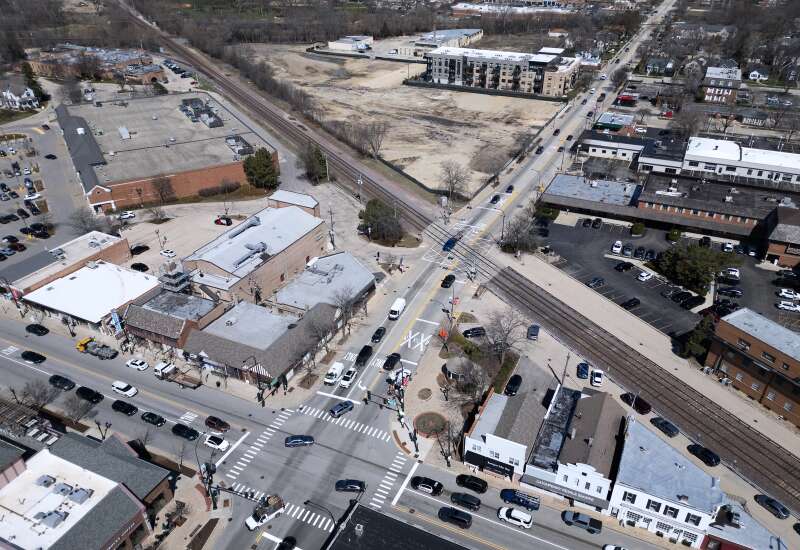
The large, triangular property in the center of this photograph is at the southeast corner of Higgins and Bartlett roads, near South Barrington. It once was home to Allstate Corp.’s headquarters but has been vacant for years. A company wants to redevelop the land. | Brian Hill/bhill@dailyherald.com

By Russell Lissau | Daily Herald

In an unusual real-estate move, Allstate Corp. has requested South Barrington officials annex the site of its former headquarters — just a little more than a year after the company had the land legally disconnected from the suburb.

South Barrington’s attorney, James Vasselli, said he’s never before heard of a property owner having land excised from a municipality only to turn around and later request annexation.

“(It’s) a unicorn event,” Vasselli said.

The annexation is proposed ahead of a potential redevelopment of the roughly 67-acre site, which is on the southeast corner of Higgins and Bartlett roads. A Rosemont company called the Opus Group wants to purchase the site and construct a light-industrial complex.

The proposal is similar to the one Texas-based Hillwood Development Co. put forth in 2022. Allstate petitioned for disconnection the following year, and it was granted by a Cook County judge in February 2025.

But Hillwood is out of the picture now, and the Opus Group has a contract to purchase the land, Vasselli said.

“One door closes, another door opens,” he said.

The Allstate property is just north of the Jane Addams Memorial Tollway and across the Higgins/Bartlett intersection from the sprawling Arboretum of South Barrington shopping center. The South Barrington Office Center is to its east.

Article continues here.

Read Full Post »

Developer Nick Serra steps April 7, 2026, onto the future balcony of a newly constructed third floor unit in a building he’s redeveloping to add rental apartments in Chicago’s Uptown neighborhood. (Brian Cassella/Chicago Tribune)

By Olivia Olander | Chicago Tribune

Above the bay windows that run up the center of a two-story apartment building in Uptown, Nick Serra stands on what had been the roof but will soon be the balcony for a new third-floor unit he’s adding.

In many circumstances, the construction work would be a sure sign that another traditional Chicago apartment building was being gutted and converted into a single-family home that could fetch more than $1 million.

Instead, the new top floor will be a four-bedroom apartment that, along with other changes Serra is making, will turn the entire building into a six-unit development capable of housing a dozen people.

“Versus, you know, two people and their golden retriever,” Serra said, as he stood last week on the unfinished top floor.

Serra is part of a cohort of developers adding units to existing buildings rather than tearing them down or converting them to single-family homes — a practice many housing advocates say helps with affordability in high-demand neighborhoods. But finding lots zoned to allow the additional square footage and density he needs is difficult, particularly on the North Side, where he primarily works. Under current rules, he has managed roughly two dozen such projects over five years.

Those difficulties finding lots for such projects could change significantly under a package of proposals from Gov. JB Pritzker that would make it easier for developers and property owners across Illinois to build the kind of multiunit housing Serra specializes in.

The plan, a cornerstone political and policy piece of Pritzker’s State of the State address in February, would loosen zoning restrictions that currently limit the residential density allowed on a given lot and, supporters say, open the door to new multifamily buildings across the state.

Additional local rules for building size and height could still apply, potentially restricting a building of the exact dimensions of the one in Uptown.

But the prospect of allowing four-flats or six-unit apartments on quiet suburban streets, and granny flats in backyards across the state, has raised alarms among many local leaders.

The response from the governor’s office? Something has to be done in the face of a housing shortage across the state, and the Pritzker administration is pushing forward anyway.

Story continues here.

Related: Pritzker to propose statewide zoning laws to spur homebuilding, limit local control,” “McLaughlin’s press conference video recording regarding Pritzker’s proposed municipal zoning powers grab posted,” “‘It’s just a bad idea’: Suburban officials oppose Pritzker’s plan to reduce local control over residential It’s just zoning

Read Full Post »


The Barrington Hills Park District Board/Riding Cult of Barrington Hills will hold their monthly meeting this evening in person and via Zoom at 6:00 PM. Some topics on their agenda include:

  • Advisory Committee Report
  • Emergency Stabling at the Riding Center
  • Payment Alternatives to Cash/Checks (Ozempic)
  • Administrator’s Report
  • Closed Session for Employee Matters & Contracts/Agreements

A copy of their agenda can be viewed here. Instructions for accessing the meeting remotely can be found here.

Read Full Post »


The District 220 Board of Education meets Tuesday evening at 6:00 PM at the District Administration Center, 515 W. Main Street. Items on their agenda include:

  • FOIA Requests*
  • Personnel Report
  • Resolution abating the working cash fund of the District
  • Consideration to Approve a Resolution Authorizing the Honorable Dismissal Due to Reduction in Force of Part-Time or Full-Time Educational Support Personnel
  • Consideration to Approve a Resolution Authorizing the Honorable Dismissal Due to Reduction in Force of Group 2-4 Certified Staff
  • Consideration to Approve Non-BSEO Classified Staff Compensation and Benefits for the 2026-2027 School Year
  • Consideration to Approve Administrative Compensation and Benefits for the 2026-2027 School Year
  • Consideration to Approve the Adoption of Multi-Year, Performance-Based Contracts for Chad May, BMS-Station Campus Principal; Chelsea Hedges, Assistant Superintendent of HR & Talent Acquisition; Eric Steckling, Director of Communications; Heather Schumacher, Hough Elementary School Principal; Josh Carpenter, Assistant Superintendent of Schools; Melissa Byrne, Assistant Superintendent of Teaching and Learning; Micah Korb, Countryside Elementary School Principal; Michelle Acosta, Early Learning Center Principal; Sarah Rabe, Assistant Superintendent of Instruction & Student Performance; Steve McWilliams, Barrington High School Principal; Peg Lasiewicki, Assistant Superintendent of Student Services & Support; Travis Lobbins, BMS-Prairie Campus Principal
  • Consideration to Adopt Resolution directing the Regional Superintendent of Schools for The County of Lake, Illinois, to certify to the County Clerk of said County the question of imposing a retailers’ occupation tax and a service occupation tax to be used exclusively for school facility purposes, school resource officers, and mental health professionals, for submission to the electors of said County at the general election to be held on the 3rd day of November, 2026 – Resolution – Lake County School Facilities Sales Tax

A copy of the agenda can be viewed here. The meeting will be live streamed on the district YouTube channel.

*Interesting to see NBC Chicago requests.

Read Full Post »

Older Posts »