By Luke Zurawski | Daily Herald
Friday, Sept. 18
Riot Fest: 11 a.m. to 10 p.m. Friday through Sunday, Sept. 18-20, at Douglass Park, West Ogden Avenue and South Sacramento Drive, Chicago. Punk, rock and alternative. Friday: Twenty One Pilots, Iggy Pop, Rise Against and Pixies. Saturday: Tool, Morrisey, Social Distortion and NAS. Sunday: Pierce The Veil, Alanis Morissette, Elvis Costello & The Imposters and The Format. General admission starts at $115 for one day, $230 for two days, $340 for three days. riotfest.org.
Huck Finn Fishing Derby: 5-7 p.m. Friday, Sept. 18, at Reiner Park, 1101 N. Green Knolls Drive, Buffalo Grove. Fishing derby for kids 2-14. Awards and raffle prizes. Registration: $8-$10. bgparks.org
Old Town Oktoberfest: 5-10 p.m. Friday, Sept. 18; 11 a.m. to 10 p.m. Saturday, Sept. 19; and 11 a.m. to 8 p.m. Sunday, Sept. 20, at 1360 N. Wells St., Chicago. Classic German beer, bratwursts, stein-holding contests, traditional German bands and more. $10. chicagoevents.com
Rotary Club of Palatine Oktoberfest: 5 p.m. to midnight Friday, Sept. 18; noon to midnight Saturday, Sept. 19; and noon to 6 p.m. Sunday, Sept. 20, on Smith and Slade streets, Palatine. German music, food, beverages, family activities and more. Free. palatinerotary.org/oktoberfest.
“Aged to Perfection” winetasting benefit: 6 p.m. Friday, Sept. 18, at Elgin Community College Spartan Terrace Restaurant, 1700 Spartan Drive, Elgin. A curated selection of wines paired with bites crafted by students and faculty from the ECC Culinary Arts Program. Seating is limited. Sponsored by the ECC Foundation and the Homecoming Alumni Committee. $75. tickets.eccartscenter.org

See a variety of makes and models during the car show at Heritage Fest in West Dundee, running Friday through Sunday, Sept. 18-20. | Rick West/Daily Herald
Heritage Fest: 6-11 p.m. Friday, Sept. 18; 10 a.m. to 11 p.m. Saturday, Sept. 19; and 10 a.m. to 5 p.m. Sunday, Sept. 20, in downtown West Dundee. Live music, business expo, arts and crafts fair from 10 a.m. to 6 p.m. Saturday and 10 a.m. to 5 p.m. Sunday, and a car show from 10:30 a.m. to 4 p.m. Saturday and Sunday. Dundee Lions host a 5K and 1.75-mile walk at 8 a.m. Saturday. Community breakfast from 8-10:30 a.m. Sunday. Entertainment lineup: Friday: Bad Motor Scooterr (Sammy Hagar tribute band) at 6 p.m. and All American Throwbacks at 9 p.m.; Saturday: School of Irish Dance at 11 a.m., Crossover at noon, Bishop Super Band (hits from Dundee Middle School staff, students and friends of the late Matt Bishop) at 1:30 p.m., Eric Case Band at 4:30 p.m., Sixes & Sevens (rock and country) at 6:30 p.m. and 7th heaven at 9 p.m.; and Sunday: Starlites at 8 a.m. in the tent, Guy Meets Girl at 10:30 a.m., The Gaffes at noon, Controlled Burn (folk rock band from West Dundee) at 1:30 p.m. and The Lenny’s at 3 p.m. Free. wdundeeheritagefest.org.
Monster Jam: 7 p.m. Friday, Sept. 18; 1 and 7 p.m. Saturday, Sept. 19; and 1 and 6:30 p.m. Sunday, Sept. 20, at Allstate Arena, 6920 N. Mannheim Road, Rosemont. World champion athletes and their 12,000-pound monster trucks compete in competitions of speed and skill. Pit Party from 10:30 a.m. to noon Saturday and Sunday; passes required. Tickets start at $29.65. monsterjam.com
An Evening With Kevin Smith: 7:30 p.m. Friday, Sept. 18, at the Hemmens, 45 Symphony Way, Elgin. Filmmaker, actor, author and podcaster Kevin Smith hosts a live question-and-answer show. $26-$57.50. (847) 931-5900 or hemmens.org/tickets.
“The Lightning Thief”: 7:30 p.m. Friday and Saturday, Sept. 18-19, and 2 p.m. Sunday, Sept. 20, at Elgin Community College’s Blizzard Theater, 1700 Spartan Drive, Elgin. Adapted from Rick Riordan’s first book in the “Percy Jackson & the Olympians” series and featuring an original rock score. Presented by Children’s Theatre of Elgin and Fox Valley Theatre Company. $16-$18. eccartscenter.org
Teachers’ Lounge Comedy: 8-10 p.m. Friday, Sept. 18, at the Raue Center for the Arts, 26 N. Williams St., Crystal Lake. Professional stand-up comics turned teachers share their unique experiences, anecdotes and frustrations about school life. $44-$54. rauecenter.org.
Saturday, Sept. 19
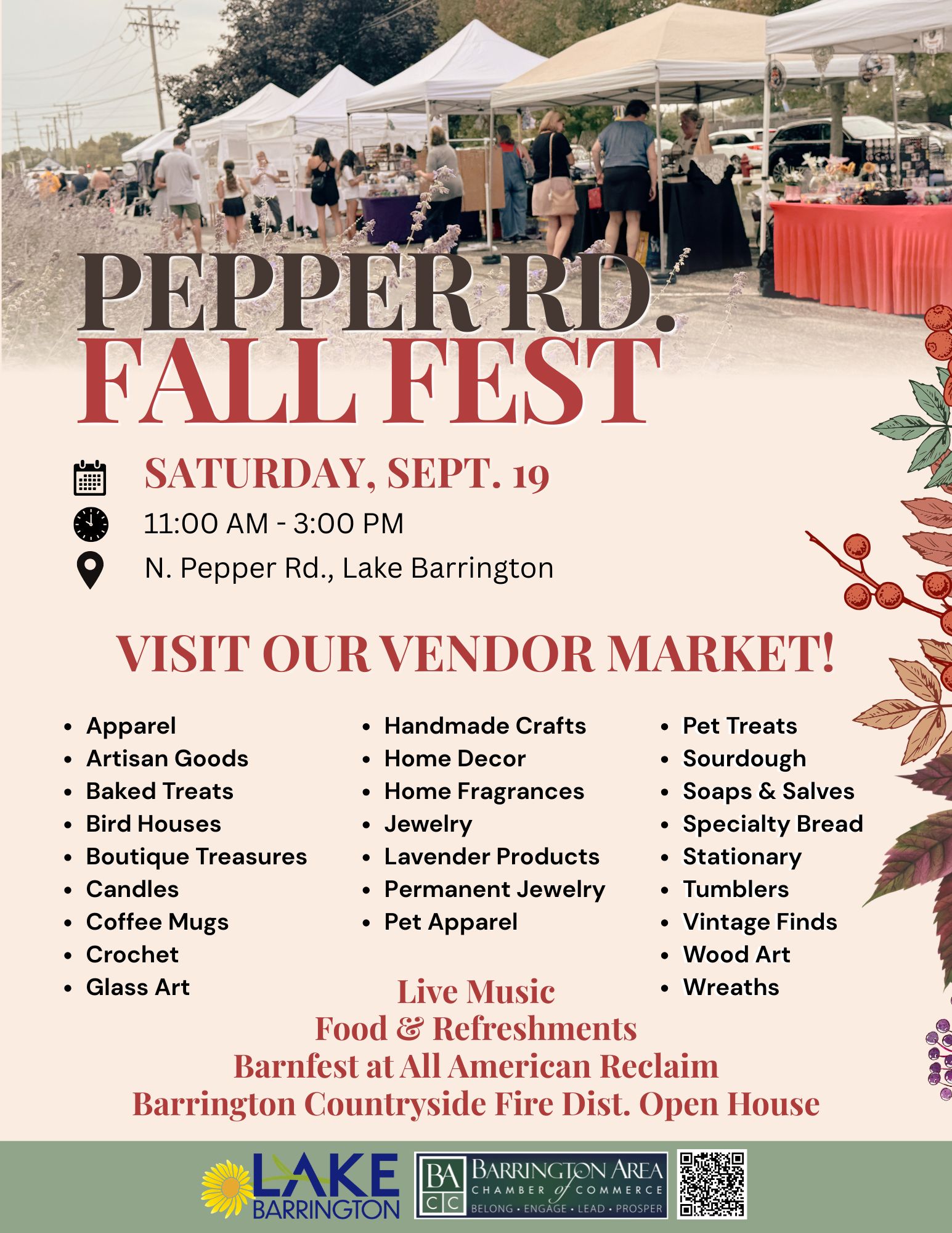
Pepper Road Fall Fest: 11 a.m. to 3 p.m. Saturday, Sept. 19, on North Pepper Road, Lake Barrington. Pop-up artisan market, live music, kids’ activities, food and drinks for purchase, vendors, activities, shopping, Barnfest at All-American Reclaim, and Barrington Countryside Fire District open house. Free. barringtonchamber.com
The Great Outdoor Beer Trail: 1-5 p.m. Saturday, Sept. 19, at Fel-Pro RRR Conservation Area, Cary. Walk the one-mile paved trail while trying 3-ounce tastes from regional brewers. Includes a souvenir tasting glass, live music and food vendors. 21 and older. $70 or $15 for designated driver. Tickets: mccdistrict.org.
Lions Heritage Fest 10K/5K Run & 1.75 Mile Walk: 8 a.m. Saturday, Sept. 19. Races start and finish at Oregon Avenue and South First Street at the VFW Post 2298 in downtown West Dundee. Proceeds benefit the Dundee Township Lions Club and the Northern Kane County Chamber of Commerce and their charities. $30-$50. Register: wdundeeheritagefest.org or runsignup.com/Race/IL/WestDundee/HeritageFest10k.
Dundee Depot Market: 9 a.m. to 2 p.m. Saturday, Sept. 19, at The Depot, 319 N. River St., East Dundee. Vintage finds, handmade goods, bakery goods and locally crafted products. eastdundee.net
Heritage Fest: 9 a.m. to noon Saturday, Sept. 19, at the Arlington Heights Historical Museum, 110 W. Freemont St., Arlington Heights. See a variety of exhibits, demonstrations and live performances. Free. ahpd.org
Run for Mental Health — Still Standing 5K: 9 a.m. Saturday, Sept. 19, starting north of Gail Borden Public Library, 270 N. Grove Ave., Elgin. The faith-based mental health awareness 5K also features a 1-mile fun walk. Register: runsignup.com/Race/IL/Elgin/StillStanding
21st Annual Antique Car, Truck & Tractor Show: 10 a.m. to 6 p.m. Saturday and Sunday, Sept. 19-20, at McHenry Stade’s Farm, 3709 Miller Road, McHenry. Vintage vehicles, oldies music, family attractions and games, pumpkin cannon demonstrations, exhibitors and food. Regular admission for the attraction area. stadesfarmandmarket.com
Central States Dahlia Society’s 59th annual Dahlia Show and Sale: 10 a.m. to 4 p.m. Saturday and Sunday, Sept. 19-20, at Chicago Botanic Garden, 1000 Lake-Cook Road, Glencoe. Hundreds of blooms will be on display by dahlia growers from across the Midwest competing for top honors. Included in general admission. centralstatesdahliasociety.com/dahlia-show-2026.
Hoffman Estates Community Garage Sale: 10 a.m. to 2 p.m. Saturday, Sept. 19, at the Seascape Family Aquatic Center parking lot, 1300 Moon Lake Blvd., Hoffman Estates. Free entry for shoppers; $30-$35 for vendors. heparks.org

The Mundelein Arts Festival runs Saturday and Sunday, Sept. 19-20, in Mundelein’s Courtland Commons. (Mundelein Park & Recreation District)
Mundelein Arts Festival: 10 a.m. to 5 p.m. Saturday and Sunday, Sept. 19-20, in Courtland Commons in downtown Mundelein. Juried art festival featuring local artists who work in a variety of media, plus music and food. Free. mundeleincommunityconnection.org.
Fall Fest: 11 a.m. to 3 p.m. Saturday, Sept. 19, at Carpenter Park, 275 Maple Ave., Carpentersville. Pumpkin decorating, bounce houses, train rides, magic show, live DJ, large vendor market, food and treats. cville.org.
“Chicago Live!”: Noon to 9 p.m. Saturday, Sept. 19, and noon to 6 p.m. Sunday, Sept. 20, at Navy Pier, 600 E. Grand Ave., Chicago. Performing arts festival featuring live music, dance, theater, and multidisciplinary performances from local and national artists. Performances include Anthony Rapp, Melody Angel, Kokandy Productions, Liquid Soul, Dancing Queen, Trinity Irish Dancers, RuPaul’s Drag Race stars Utica and Denali, Q Brothers, Nico Segal, Fat Theatre Project and more. Free. navypier.org.
Elmhurst Craft Beer Fest: 2-6 p.m. Saturday, Sept. 19, on the grounds of Elmhurst History Museum, 120 E. Park Ave., Elmhurst. Craft brews, meads, ciders, seltzers and food at the 11th annual fundraiser for the museum and Churchville one-room schoolhouse. Early entry at 1 p.m. $57.50, regular entry $47.25, and designated driver $21.50. Tickets: elmhurstcraftbeerfest.com.
Northbrook Brewfest: 3-7 p.m. Saturday, Sept. 19, at Village Green Park, 1810 Walters Ave., Northbrook. Live music, beer tasting, photo booth, games and more. 21 and older. Tickets start at $49, $30 for a non-tasting ticket. nbparks.org.
Party in the Park: 4-9:30 p.m. Saturday, Sept. 19, at Community Park, 5 Parkview Lane, Hawthorn Woods. Petting zoo, train rides, food vendors, ax throwing, two live bands and the rescheduled July 3 fireworks show. Free. vhw.org
“As You Like It”: 7:30 p.m. Saturday, Sept. 19, at Elgin Community College SecondSpace, 1700 Spartan Drive, Elgin. Shakespeare comedy, performed by the Goodly Creatures Theatre, led by ECC alum Katrina Syrris. Proceeds will support ECC Fine Arts. Sponsored by the ECC Foundation and the Homecoming Alumni Committee. $50. tickets.eccartscenter.org

Six Flags Great America Fright Fest returns Saturday, Sept. 19, and runs through Nov. 1 in Gurnee. | Daily Herald
Six Flags Great America Fright Fest: Saturday, Sept. 19, through Nov. 1 at Six Flags Great America, Six Flags Drive, Gurnee. Thrills by day and frights by night with haunted houses, scare zones, spine-chilling shows and rides. Tickets start at $45. For dates and hours, visit sixflags.com/greatamerica/events.
Sunday, Sept. 20
Green Fair: 8 a.m. to 12:30 p.m. Sunday, Sept. 20, at Mike Rylko Community Park, 951 McHenry Road, Buffalo Grove. Learn how to improve the environment and make the community a greener and healthier place to live. Free. bgparks.org/green-fair.
Kane County Doll Show: 9 a.m. to 3 p.m. Sunday, Sept. 20, at the Kane County Fairgrounds Prairie Events Center, 525 S. Randall Road, St. Charles. Doll show featuring antique, vintage and collectibles, Barbies, Steiff, doll appraisals and more. Special exhibit on Mod Francie & Friends with a presentation by Bradley Justice on “Francie Turns 60” at 1 p.m. Early bird entry at 8 a.m. for $15. Regular entry $8 or free for kids 12 and younger. kanecountydollshow.com.
Cantigny Car Show: 10 a.m. to 3 p.m. Sunday, Sept. 20, at Cantigny Park south parking lot, 1S151 Winfield Road, Wheaton. Vintage cars, entertainment and food and beverages. First 200 people through the gate receive a free limited-edition T-shirt. Register a vehicle for $21 until Aug. 30 or $26 after; parking included. Note: Cashless event. Parking: $21 per car. cantigny.org

Wheeling Park District’s Fallapalooza will take place Sunday, Sept. 20, at Heritage Park. | Ryan Rayburn/for the Daily Herald
Fallapalooza: 1-5 p.m. Sunday, Sept. 20, at the Heritage Park Performance Pavilion, 201 Community Blvd., Wheeling. Live music by the Eric Case Band, a petting zoo, pony rides, inflatables, airbrush tattoos and more. Food and beverages for purchase. Free. wheelingparkdistrict.com.
Heirloom Apple Fest: 1-4 p.m. Sunday, Sept. 20, at Durant-Peterson House in the LeRoy Oakes Forest Preserve, 37W700 Dean St., St. Charles. Learn about apples popular during the 19th century. Suggested donation: $3 or $1 for kids. ppfv.org
Palatine Historical Society Cemetery Walk: 1-4 p.m. Sunday, Sept. 20, at Hillside Cemetery, 375 N. Smith St., Palatine. Guided tours of the cemetery as actors play the roles of Palatine residents from the village’s past. Tickets required; admission fee. palatinehistoricalsociety.com.

Comedian Ilana Glazer will perform at the Chicago Theatre Tuesday, Sept. 22. | Charles Sykes/AP
Tuesday, Sept. 22
Ilana Glazer Live: 7 p.m. Tuesday, Sept. 22, at the Chicago Theatre, 175 N. State St., Chicago. Comedy. Tickets start at $52.25. msg.com.
Wednesday, Sept. 23
Zach Rushing: 7 p.m. Wednesday, Sept. 23, at the Chicago Improv, 5 Woodfield Road, Schaumburg. Stand-up comedy. “The Redneck Logic Tour.” $46.19-$89.36. improv.com/chicago
THESPIAN: An Actor Prepares … to Read Your Mind: 7:30 p.m. Wednesday, Sept. 23, at the Metropolis Performing Arts Centre, 111 W. Campbell St., Arlington Heights. Actor and mentalist Fred Zimmerman presents a show of performance art and psychological illusion. $40. metropolisarts.com
Thursday, Sept. 24
Elgin Fringe Festival: 6 p.m. Thursday and Friday, Sept. 24-25; 1:30 p.m. Saturday, Sept. 26; and 1 p.m. Sunday, Sept. 27. Fringe Central at Side Street Studio gallery, 15 Ziegler Court, Elgin. Nearly 90 performances showcasing local and national talent in dance, theater, comedy, music, magic, circus, storytelling, experimental multimedia and more. Plus, a visual art exhibition, outdoor shows and themed parties. Tickets: Free to $12, with $4 entry buttons and an all-access pass for $95. For tickets and a schedule, see elginfringefestival.com.
Ongoing
Goebbert’s Fall Festival: 9 a.m. to 6 p.m. daily through Nov. 1, at Goebbert’s Farm & Garden Center, 40 W. Higgins Road, South Barrington. Animals, corn stalk mazes, wagon rides, camel rides, pig races, fall food, produce and more. Some attractions are only available on weekends. $20 on weekdays; $24 in advance online and $27 at the door on weekends and Columbus Day. Extra fees for some activities. goebbertspumpkinfarm.com/fall-festival.
Richardson Sunflower Fields: 3-11 p.m. Fridays in September; plus 10 a.m. to 11 p.m. Saturdays and noon to 9 p.m. Sundays through Nov. 1, and 3-9 p.m. Thursdays and 10 a.m. to 11 p.m. Fridays in October, at Richardson Farm, 909 English Prairie Road, Spring Grove. Corn maze, pumpkin patch, observation tower, sunflower field, zip line, zorbing, pig races and more. $26, $22 for kids 3-12, and free for kids 2 and younger; $32/$26 Saturdays and Sundays in October. richardsonadventurefarm.com.
“Jekyll & Hyde”: 7 p.m. Tuesdays through Fridays; 2 and 7:30 p.m. Saturdays; and 1 p.m. Sundays, through Nov. 8; plus 6:30 p.m. Sundays, Sept. 20 and 27 and Oct. 11; and 1 p.m. Wednesday, Sept. 30, and Wednesdays, Oct. 14 through Nov. 4, at Broadway Playhouse at Water Tower Place, 175 E. Chestnut St., Chicago. Murder and chaos are pitted against love and virtue in this sweeping Gothic musical. Tickets start at $60.75. broadwayinchicago.com
“An Iliad”: 7:30 p.m. Thursdays through Saturdays and 2 p.m. Sundays, through Sept. 20, at the Elgin Art Showcase, 220 DuPage St., Elgin. Janus Theatre Company’s production of Lisa Peterson and Denis O’Hare’s modern retelling of Homer’s epic poem. $28. janusplays.com.
“Ride the Cyclone”: 7:30 p.m. Thursdays and Fridays, and 2 and 7:30 p.m. Saturdays and Sundays, through Oct. 25, at the Metropolis Performing Arts Centre, 111 W. Campbell St., Arlington Heights. The Spirits of St. Cassian High School Chamber Choir return in this musical. $25-$49. metropolisarts.com.
“Come From Away”: Various times Wednesdays through Sundays, through Oct. 18, at the Marriott Theatre, 10 Marriott Drive, Lincolnshire. Based on the true story of the time when 38 planes, carrying thousands of people from around the globe, were diverted to the isolated community of Gander, Newfoundland, on Sept. 11, 2001. Tickets start at $78.10. marriotttheatre.com.
Find much more here,
Read Full Post »