Feeds:
Posts
Comments

Archive for the ‘Data Center’ Category

Rep. Robyn Gabel, D-Evanston, and Sen. Ram Villivalam, D-Chicago, speak at a rally for the POWER Act, a bill regulating data centers, about the bill’s next steps after the session ends. | Capitol News Illinois photo by Peter Hancock

By Nikoel Hytrek and UIS Public Affairs Reporting (PAR)

Article Summary

  • The POWER Act, an expansive bill to regulate data centers, will not pass the General Assembly this spring, but the bill’s leaders say the measure isn’t dead and negotiations will continue through the summer.
  • In the meantime, they and other lawmakers who have signed onto the POWER Act said the legislature should pause data center tax credits that have been in place since 2019.
  • According to a 2024 report, at least 27 data centers had received incentives totaling $983 million in estimated lifetime tax breaks and benefits.
  • Lawmakers said negotiations will include multiple stakeholders, from utility companies to energy advocacy groups, labor unions and the data center lobby.

This summary was written by the reporters and editors who worked on this story.

Read the article here.

Read Full Post »

“Dear Residents,

I have received emails from residents regarding the Village of Hoffman Estates Plan Commission meeting that is taking place next week.   They are holding a public hearing regarding a proposed rezoning request for M-2.

Sec. 9-9-2. – M-2 Manufacturing District.

A. Legislative Intent. The purpose of the M-2 Manufacturing District is to provide areas for a variety of industrial uses where major transportation networks provide accessibility. This district is intended to be developed in a manner which will minimize potential adverse influences to adjoining districts through the application of performance standards.

B. Permitted Uses.
1. Permitted uses of land or buildings, as hereinafter listed shall be permitted in the M-2 Manufacturing District under the conditions specified. No building or lot shall be devoted to any use other than a use permitted hereunder with the exception of the following:

a. Uses lawfully established on the effective date of this Code; and
b. Special uses allowed in accordance with the provisions of Section 9-9-2-C.
2. The following uses are permitted in the M-2 Manufacturing District:
a. Offices.
b. Research and development facilities.
c. Contractor and construction supply and shops conducted wholly within an enclosed building, including but not limited to plumbing, HVAC, roofing and electrical.
d. Accessory uses, including, but not limited to, the following:

(1) Antennas and communication towers.
(2) Architectural or landscaping embellishments, pools, fountains and bridges.
(3) Public utility installations and public service uses to include requirements for the furnishing of electricity, gas, oil, telephone and television services.
(4) Storage of building materials (during course of construction only).
(5) Temporary buildings for construction purposes only in accordance with the provisions of Section 9-3-10.
e. The following uses are permitted, however, when the property is adjacent to any residential development, the uses shall only be permitted provided all improvements on the M-2 property, including parking and other structures, are set back a minimum of 100 feet from the nearest residential property line:

(1) Wholesale and distribution facilities.
(2) Wholesale florist or greenhouses.
(3) Printing and publishing facilities.
(4) Manufacturing, production, processing, assembly, fabricating, cleaning, servicing and repairing of materials, goods and products.
(5) Mail order facilities.
(6) Packaging and crating facilities.
(7) Warehouses.
f. Data center.

The meeting will take place on Wednesday June 3, 2026, at 6:30 PM at the Hoffman Estates Municipal Building, 1900 Hassell Road, Hoffman Estates, IL.

The request seeks to change the zoning of approximately 186 acres from CMU Commercial Mixed Use and TN Traditional Neighborhood to M-2 Manufacturing District. The property is generally located between Illinois Route 59 to the east, the Canadian National Railway to the west Higgins Road (Route 72) to the south and is across the street from the Woods of South Barrington.

Any residents interested in learning more or providing public comment should make plans to attend the meeting.”

Thank you Mayor McCombie!

Related:(Plum Farms) NOTICE OF PUBLIC HEARING JUNE 3,” “Hoffman Estates could see third data center campus with sale of Plum Farms property,” “Hoffman Estates approves sewer, water for development of 185 acres west of The Arboretum,” “Hoffman Estates approves tax incentive at routes 59, 72,” “District 220 lawsuit against Hoffman Estates, Plum Farms developers dismissed,” “South Barrington residents sue over Hoffman Estates development,” “Editorial: Listen to agencies that would feel consequences of Hoffman Estates development

Read Full Post »

The Barrington Area Council of Governments (BACOG) is scheduled to meet this evening beginning at 6:00 PM at the Lake Barrington Village Hall, 23860 Old Barrington Road. Their meetings will include:

  • 6:00 PM – Finance
  • 6:40 PM – Nominations
  • 7:00 PM – Executive Board

Meeting agendas are not posted by BACOG, nor are minutes, but their website does state, “Copies of approved minutes for BACOG committee and executive board meetings are available upon request. Please submit requests by email to bacog@bacog.org.

Related: “(Plum Farms) NOTICE OF PUBLIC HEARING JUNE 3


Read Full Post »

Image courtesy Joe Lewnard | Daily Herald Staff Photographer, 2019

“Notice is hereby given that the Plan Commission of the Village of Hoffman Estates will hold a public hearing on June 3, 2026 at 6:30 p.m. in the Hoffman Estates Municipal Building, 1900 Hassell Road, Hoffman Estates, IL to consider a map amendment (rezoning) from the current zoning of CMU Commercial Mixed Use and TN Traditional Neighborhood to M-2 Manufacturing District for property generally bounded by Illinois State Route 59 on the east, the Canadian National Railway on the west, Illinois Route 72 (Higgins Road) on the south, and collectively containing approximately 186 acres.

The petitioner of the request is H.E. Holdings LLC (owner).
P.I.N.s: 01-28-301-004, 01-33-100-003, 01-33-100-004, 01-33-103-008, 01-33-103-007

Raj Chhatwani, Chairperson
Plan Commission
Published in Daily Herald May 18, 2026 (332354), posted 05/18/2026″

Editorial note: The notice signs state, “FOR FURTHER INFORMATION, PLEASE CONTACT THE PLANNING AND TRANSPORTATION DIVISION, 847-781-2660, PLANNING@HOFFMANESTATES.ORG.

Related:Hoffman Estates could see third data center campus with sale of Plum Farms property,” “Hoffman Estates approves sewer, water for development of 185 acres west of The Arboretum,” “Hoffman Estates approves tax incentive at routes 59, 72,” “District 220 lawsuit against Hoffman Estates, Plum Farms developers dismissed,” “South Barrington residents sue over Hoffman Estates development,” “Editorial: Listen to agencies that would feel consequences of Hoffman Estates development

Read Full Post »

The Village Board of Trustees will be conducting their regular monthly meeting Tuesday evening beginning at 6:30 PM. Topics on their agenda include:

  • [Vote] Board of Health Appointment:
    Frank Konicek – Chairman, one-year term
  • [Vote] Riding Club Commission Appointments:
    Elaine Ramesh – Chairman & Member, each a one-year term
    Mary Beth Holsteen – Member, one-year term
    Susan Helenowski – Member, one-year term
    Vicki Kelly – Member, one-year term
  • [Vote] Plan Commission Appointments:
    Matthew Vondra – Chairman, one-year term & Member, 3-year term
    Christopher Geier – Member, three-year term
    Brent Burval – New Nominee* for Member, three-year term
  • [Vote] Zoning Board of Appeals Appointments:
    Gina Koertner – Member, five-year term
    John Gigerich – Member, five-year term
  • [Vote] Police Pension Board Trustees Appointments:
    Christopher Krzysko, Two-year term
    George Panos, Two-year term
  • Register Now: Land We Love Run 5K/10K Celebrating America250 on June 28, 2026

A copy of their agenda, including info on listening to the meeting, can be viewed and downloaded here.

*No bio provided

Read Full Post »

Posted yesterday, May 15:

“This week, I attended the Northwest Municipal Conference meeting where one of the major topics discussed was a status update regarding the proposed Build Illinois Act (BUILD).

As many of you know, the Governor and state legislators are working to advance legislation that could significantly impact local zoning authority throughout Illinois. If passed, the BUILD Act would allow the State greater control over zoning and development decisions that have historically been managed at the local level by municipalities and their residents.

While supporters argue the bill is intended to address housing shortages and increase development opportunities, many communities, including ours, are concerned about the potential loss of local control and the one-size-fits-all approach the legislation could create.  Every community has unique infrastructure, traffic patterns, environmental considerations, and development goals, and many believe these decisions are best made locally rather than mandated at the state level.  One of the things the Bill requires is that municipalities allow up to 8- unit multi-family buildings in all single-family zoning districts while drastically reducing the minimum lot sizes and setback requirements.

Below are some of the examples and challenges on this part of the bill that communities may face should this bill pass.

Both the Illinois Municipal League (IML), representing 1,294 municipalities statewide, and the Metropolitan Mayors Caucus, representing approximately 275 cities, towns, and villages, oppose the bill in its current form. For those concerned, I encourage all residents to contact your Legislators and Governor’s office and make your voices heard regarding your concerns with this proposed legislation.

Darby Hills, State Senate
Springfield Office: 217-782-8010, District Office: 224-662-4544

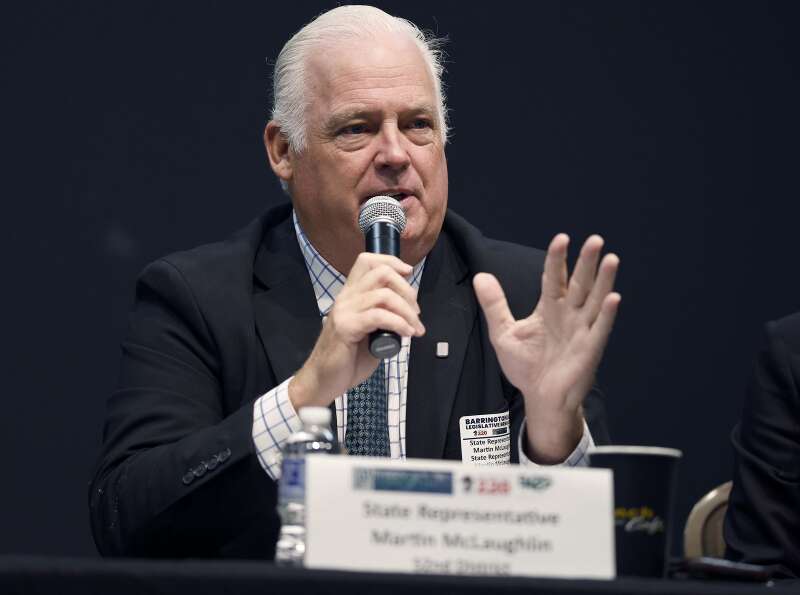
Marty McLaughlin, State Representative
RepMcLaughlin@gmail.com
Springfield Office: 217-782-1517, District Office: 224-634-8300

Nabeela Syed, State Representative
info@repsyed.com
Springfield Office: 217-782-3696, District Office: 773-916-6553

Governors Office

Springfield
817-782-6830 or 217-782-6831
Chicago
312-814-2121 or 312-814-2122

IMPORTANT AND HELPFUL LINKS BELOW:

  • Full Building Up Illinois Act HERE
  • Informative presentation put together by the City of Peoria with more examples of what the suggested changes could look like in our community: LINK HERE

Thank you so much, Mayor McCombie!

Related:Pritzker’s affordable housing plan gets Senate hearing as municipalities remain opposed,” “Village of Barrington President shares perspectives on Pritzker’s BUILD plans,” “(Ignoring public opinion) Pritzker says of BUILD Plan for homes would not cost taxpayers,” “Gov. JB Pritzker’s ambitious housing plan for Illinois: More four-flats, looser rules,” “Pritzker to propose statewide zoning laws to spur homebuilding, limit local control,” “McLaughlin’s press conference video recording regarding Pritzker’s proposed municipal zoning powers grab posted,” “It’s just a bad idea’: Suburban officials oppose Pritzker’s plan to reduce local control over residential It’s just zoning

Read Full Post »

AI data centers are helping drive up costs for consumers as demand is beginning to threaten the power supply. | Image courtesy ComEd/Shutterstock

By Brett Chase | WBEZ Chicago

ComEd electric customers will see at least a 12% jump in monthly charges starting in June as big data centers increase demand for power and an unrelated consumer credit ends.

The average monthly residential bill is $107, according to ComEd, but that charge will jump to at least $120 as more high-tech operations suck up electricity. A credit related to nuclear power and renewable energy that was a temporary relief from high rates is also set to end at the end of this month.

The majority of the monthly increase is due to the credit expiring, but as much as a quarter of that jump in cost is due to the high demand of power and prices set by a multistate grid operator known as PJM Interconnection.

The upcoming increase follows a double-digit spike in electric bills a year ago credited almost entirely to the rise of data centers, most of which are powering artificial intelligence applications.

And the data center trend doesn’t appear to be slowing.

ComEd says there are more than 80 data centers in Northern Illinois using massive amounts of power. In a state filing last year, the utility said there were another 75 proposed commercial projects in the region that also would be large electricity users.

The estimated power use for those proposed operations is far more than the electricity currently being produced, ComEd said. It’s not clear how many of those proposed operations will actually go forward.

Article continues here.

Read Full Post »

What you need to know about the hyperscale data centers coming to the Midwest | Credit: Illustration by Shira Friedman-Parks

By Siri Chilukuri | Chicago Reader

The explosion of proposed data centers across Illinois has sparked a fierce, bipartisan backlash and even legislation to curb the long-lasting effects on people’s air quality, water quality, and energy bills. In town halls from Pekin to Joliet to Chicago’s southeast side, people have packed rooms and spent hours discussing the impact of potential developments on their communities. As residents grapple with project proposals, it’s never been more important to understand the impact of data centers.

Everything from the emails you send to the photos you save on your phone is stored in a data center. For decades, data centers have been central to the architecture of the Internet, especially the digital lives we lead today. But the rise of artificial intelligence, in particular generative AI—which uses computer models to produce text, images, videos, and more—is driving the development of facilities that use more energy and water than ever before. The size of these so-called hyperscale data centers, and the profit motives driving the rush to get them online quickly, can cause pollution.

Sarah Moskowitz, executive director of the Citizens Utility Board, has been working with utility customers for decades on issues of affordability and climate change. The CUB is an advocacy organization for Illinois ratepayers, which has been watching the rise of data center projects in Illinois and learning more in the process about what they actually do. For Moskowitz, the distinction between next-generation hyperscale data centers that have roiled communities and the existing data center infrastructure is an important one to make. At the most basic level, “a data center is a physical facility containing equipment to store, process, and disseminate digital information,” Moskowitz said. “A hyperscaler is basically a large version of that. Generally, we think of hyperscalers as gigantic facilities, largely deployed to process artificial intelligence.”

Even the term “hyperscale” is imprecise, though, according to Helena Volzer, senior source water policy manager at the Alliance for the Great Lakes. “There’s really no hard and fast definition of what hyperscale even means. It just means a large facility,” Volzer said. Economists at the University of Virginia expect an average hyperscale data center to be about 300,000 square feet by 2030.

Hyperscale data centers are energy intensive not just because of their massive size but also because of what they process. The power used by generative AI is staggering—the computational power needed to train the large language models that power chatbots, such as OpenAI’s ChatGPT or Anthropic’s Claude, and the power needed to perform basic functions once they’re up and running far outpaces the demands of existing data centers. One Goldman Sachs report estimates that AI will spur a 165 percent increase in data center power consumption by 2030.

“What makes the data center problem unique is the fact that these facilities are being built in a specific location, or specific locations, and they are being built en masse,” said Yury Dvorkin, an engineering professor at Johns Hopkins University. “[If] you put a lot of electricity demand in a very constrained location, what happens is that it’s harder for the grid to deliver power in that specific location.”

Report continues here.

Related:Illinois lawmakers begin days of deep dives on data centers,” “Do you trust our Board of Trustees? We don’t. But you decide for yourself once we have finished. (Part 4),” “Do you trust our Board of Trustees? We don’t. But you decide for yourself once we have finished. (Follow-up),” “Do you trust our Board of Trustees? We don’t. But you decide for yourself once we have finished. (Part 3),” “Do you trust our Board of Trustees? We don’t. But you decide for yourself once we have finished. (Part 2),” “Do you trust our Board of Trustees? We don’t. But you decide for yourself once we have finished. (Part 1),” “110 Acre AI data center campus pitched to Village Board

Read Full Post »

The District 220 Board of Education meets this evening at 6:00 PM at the District Administration Center, 515 W. Main Street. Items on their agenda include:

  • FOIA Reports
  • Board Committee Reports: Finance Committee, Facilities Committee, Policy Committee, Legislative Committee, Equity Committee, Health Insurance Committee, Referendum Construction Steering Committee, Safety & Security Committee
  • Revised Personnel Report
  • Minutes
  • Consideration to Approve Paper Contract
  • Consideration to Approve Second Reading of Board Polic(ies)
  • Consideration to Approve the Reciprocal Reporting Agreement with the Sheriff of Lake County
  • Social Media Awareness and Digital Citizenship Update

A copy of the agenda can be viewed here. The meeting will be live streamed on the district YouTube channel.

Related:Over $100,000 in Special Interest Funding gifted to 220 Board member’s campaign in failed bid for State Rep job,” “New Evidence of Chan Ding’s Policy Violations and Conflicts of Interest,” “The D220 Board of Ed gets another ‘F’ in accountability & transparency,” “The Real Issue in Barrington 220 Isn’t Parking or Levies — It’s Leadership Culture,” “BOARD OF ED VOTES, MEMBER CHAN DING MADE FLAGRANT POLICY VIOLATIONS – Part 2,” “BOARD OF ED VOTES, MEMBER CHAN DING MADE FLAGRANT POLICY VIOLATIONS,” “District 220’s Lack of Transparency (Updated),” “District 220’s Lack of Transparency

Read Full Post »

Environmental advocates rally for greater data center regulation in Illinois at the Capitol on Wednesday. (Capitol News Illinois photo by Jenna Schweikert)

By Nikoel Hytrek and UIS Public Affairs Reporting (PAR)

SPRINGFIELD —Illinois lawmakers are digging deep on data centers, with a House committee hearing from mayors, labor groups, and agriculture representatives about the facilities’ local impacts in the first of three planned meetings.

Rep. Ann Williams, D-Chicago, the chair of the House Executive Committee, said she wanted to hear about the benefits and challenges of data centers as the General Assembly considers regulations like the POWER Act.

“Whatever we do here, we have to put people first,” she said. “We have to put communities first. Data’s important, business is important, revenues are important, but people must come first.”

Water use, energy use, noise and how community benefit agreements are constructed were the primary concerns lawmakers wanted to address on Wednesday.

Generally, the speakers acknowledged data centers are part of a growing economy and are needed to support technology like AI, cloud computing and data storage used by various industries, from education to health care.

Some cautioned against regulation, saying it could dissuade companies from investing in Illinois while others aired different concerns they’ve encountered.

An Illinois Senate committee has two data center-related hearings scheduled for later this week as well. Environmental advocates on Wednesday also lobbied in the Capitol for data center regulation.

Story continues here.

Read Full Post »

Older Posts »