Feeds:
Posts
Comments

Archive for the ‘Economy’ Category

By Glenn Minnis | The Center Square

Illinois state Rep. Martin McLaughlin, R-Barrington Hills, is quick to point an accusatory finger when it comes to assessing blame for the state’s fast dwindling population.

New U.S. Census Bureau data analyzed by Illinois Policy Institute shows since 2020, 84% of all Illinois communities have lost population with small towns being hit the hardest. More than 900 of the state’s 1,294 communities of roughly 10,000 population lost residents over the last five years. Many of those leaving cite high taxes as a driving force for them deciding to walk away.

“Democrats haven’t recognized two letters that they seem not to understand,” McLaughlin told The Center Square. “It’s the letter N and the letter O. They have not said ‘no’ to any of these social programs, to any of the social experiments. All they’ve been doing is taking our taxes and funding at twice the rate of inflation. They’re addicted to spending and there isn’t enough money this year to make all of their constituents and lobbyists happy.”

Illinois state Rep. Martin McLaughlin, R-Barrington Hills | BlueRoomStream

McLaughlin said it’s not just smaller cities in Illinois seeing people leave, Chicago also lost more than 27,000 residents in 2024 compared to April 2020 levels.

Across the city, the downward spiral comes in spite of an ongoing influx of international migrants that has seen at least 240,000 settle in the area over the last five years, even increasing the city’s population by roughly 22,000 residents in 2024.

McLaughlin insists options he and other Republicans have already put forth could make all the difference.

“If you listen to the governor, he likes to believe that we are a thriving, upwardly mobile state for all residents and the outmigration is evident that, not only is he wrong, but his identity politics and his social engineering programs are having absolutely no impact on changing the lives of everyday Illinoisans,” he said. “The spending that we are doing needs to be going to how to alleviate property taxes, business taxes, and regulation.”

More here.

Read Full Post »

Outcomes for Illinoisans have dropped since Gov. J.B. Pritzker took office. The nation’s Democrats need to see where he’s taken Illinois before following his lead on the national stage.

By Patrick Andriesen | Illinois Policy Institute

Illinois Gov. J.B. Pritzker has appeared on CNN, The View, Jimmy Kimmel Live, made what sounded like a stump speech in New Hampshire and been the subject of a Newsweek article speculating about a run for president.

Pritzker himself hasn’t announced if he’s running for a third term as governor or might be occupied with a run for president in 2028.

But before deciding whether Pritzker should be leading the nation, there’s a basic question to consider: How has Illinois done since he took office?

Illinois’ economic growth since Pritzker took office has been the seventh worst in the nation, and the worst among the 10 most-populated states. Other measures of the state economy are also disappointing.

Economic growth trailed the nation

Illinois’ economic growth trailed the nation during Pritzker’s tenure, ranking 44th for percentage growth in state gross domestic product. Illinois’ GDP grew by 30.6% between 2018 and 2024 without adjusting for inflation, ranking seventh worst in the nation.

Illinois’ GDP growth trailed neighboring states as well as the nation under Pritzker’s administration, driven in part by years of outmigration as residents left the state for lower-cost locales.

Andriesen’s report continues here.

Read Full Post »

Illinois Gov. JB Pritzker waits to speak during a Democratic National Convention security briefing at the U.S. Secret Service’s Chicago Field Office, in Chicago, July 25, 2024.

By Jesus Mesa | Newsweek

Illinois Governor J.B. Pritzker, heir to the Hyatt hotel empire, has the kind of profile that seems destined to ignite debate in today’s Democratic Party. He’s rich—very rich, to the tune of nearly $4 billion. But he’s also big—in stature, yes, but also in rhetoric.

In recent months, Pritzker has emerged as one of the loudest, most full-throated voices opposing President Donald Trump‘s second term, even as his own party wrestles with how to handle the contradictions of populist rage and patrician leadership.

Pritzker’s growing national footprint comes at a moment of reckoning for Democrats. His speeches are forceful, his money is bottomless, and his policy platform leans unapologetically liberal. But can a billionaire—especially one born into wealth—really be the champion of a party that’s spent the last decade railing against economic oligarchy?

Newsweek reached out to Pritzker’s office with an interview request for this story.

A Progressive in a Billionaire’s Clothing

In the wake of Joe Biden‘s exit and Kamala Harris‘s defeat in 2024, Pritzker has stepped forward. And not subtly.

“Never before in my life have I called for mass protests, for mobilization, for disruption—but I am now,” Pritzker boomed in a fiery New Hampshire speech this spring. “Democrats must castigate [Republicans] on the soapbox and then punish them at the ballot box,” he added.

The 60-year-old governor has drawn comparisons to Franklin D. Roosevelt, another blue blood who governed as a populist and railed against entrenched economic power. “Take it from an actual billionaire—Trump is rich in only one thing: stupidity,” Pritzker said at the 2024 Democratic National Convention, drawing a roar from the crowd. It’s a line he’s repeated since, aiming his considerable fortune and influence squarely at the president.

Newsweek’s interview continues here.

Read Full Post »

Electric bills are about to jump by an average of $10.60 a month due to increased power demand across the country. A consumer organization also blames the electric grid operator. | Pat Nabong/Sun-Times file

By Brett Chase | Chicago Sun*Times

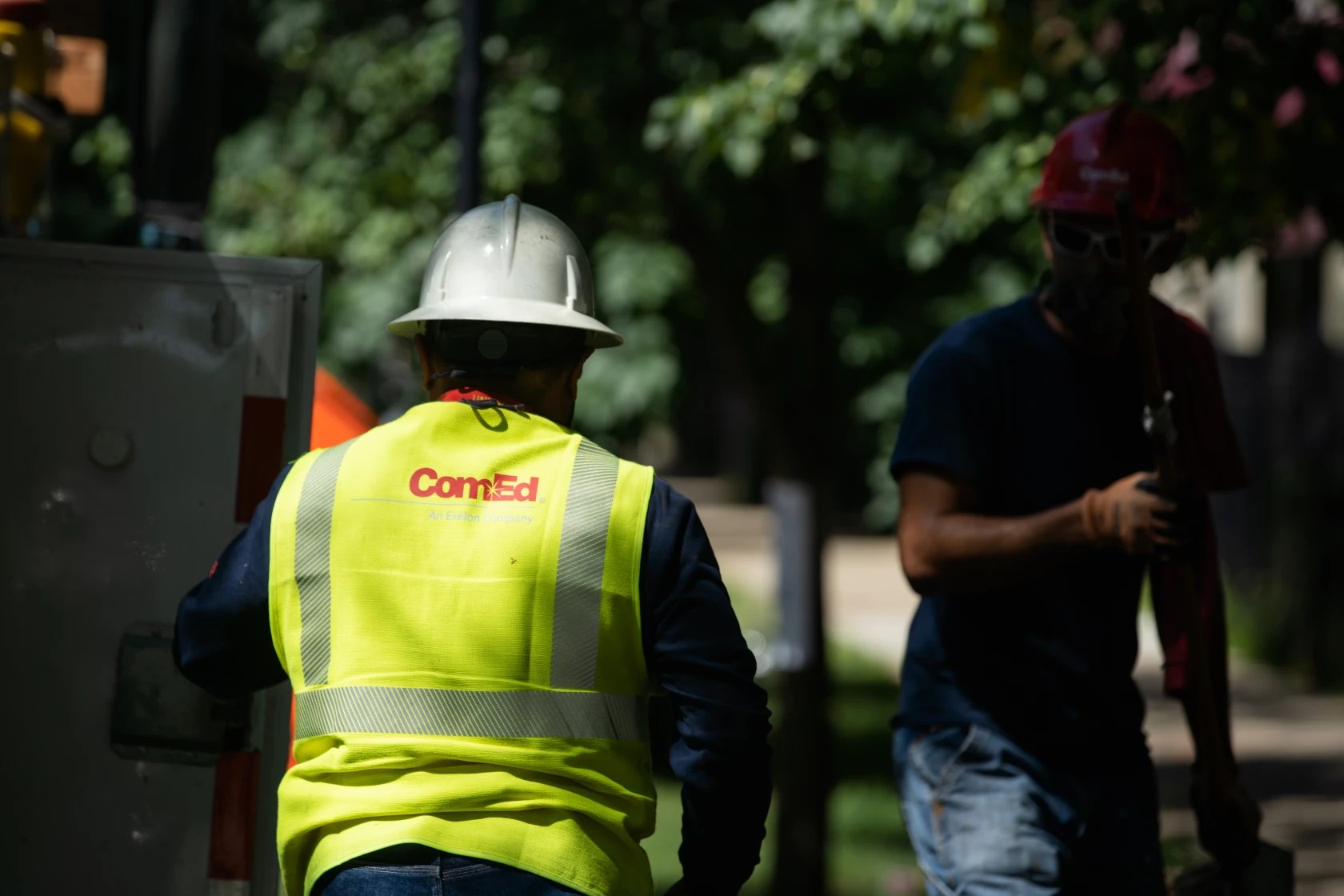
ComEd customers are about to see a big spike in their electric bills.

As the Chicago Sun-Times reported in November, the demand for power from big data centers and a delay in connecting new power sources, such as solar and wind, to the electric grid is resulting in ComEd customers seeing their monthly bills go up $10.60 a month on average.

Most customers won’t see this increase until their July bills are delivered, a spokesperson for the utility said. The higher prices may remain until May of next year.

Power demand across the country has skyrocketed as big data centers and artificial intelligence operations have created huge demand. Meanwhile, new sources of renewable energy, including wind and solar power, have been slow to get connected to an electric grid that spans from Northern Illinois to the East Coast, said Jim Chilsen, a spokesperson for the consumer watchdog Citizens Utility Board.

“Those generators could bring down prices,” Chilsen said of the solar and wind projects.

Coal plants in Illinois and across the country have been closing, and the state has promoted cleaner renewable sources under a 2021 law aimed at fighting climate change. The problem is that new renewable energy isn’t getting connected fast enough to meet surging demand at the very time older sources of power, such as coal, are being shut down.

Chilsen blamed policies set by the electric grid operator, an organization known as PJM, for the difficulty bringing renewables on line.

“Of course data centers that drive up demand play a role,” Chilsen said, “but the No. 1 reason is poor policy.”

State lawmakers also need to pass legislation that will help get renewable energy projects up and running, he added.

Read more here.

Read Full Post »

Illinois leaders keep using tax hikes as a budget quick-fix, but the state’s fiscal troubles – and the taxpayer burden – persist. Here are the 70 tax and fee hikes state leaders have imposed during the past 15 years.

By Lauren Zuar | Illinois Policy Institute

Seventy tax and fee hikes in 15 years haven’t stopped Illinois’ financial dysfunction – they’ve enabled it.

After at least 70 tax and fee increases since 2011, Illinoisans last year paid $17.3 billion more. Since 2010 all those increases in the state’s tax burden has cost Illinois taxpayers more than $110 billion in additional taxes paid.

The result of all that new money?

Illinois has the nation’s lowest emergency reserves. Its government pension crisis has worsened, with $143.7 billion in unfunded liabilities and four of the country’s worst-funded state-run systems. And forecasts show a potential $1.2 billion budget shortfall in 2026.

This isn’t because of a lack of revenue, something Gov. J.B. Pritzker has even admitted. Illinois’ core budget issue is chronic overspending, which consistently outpaces economic growth and shows no signs of slowing during the next five years.

While tax hikes haven’t saved state finances as promised, their proponents keep pushing them: a progressive income tax, higher gas and liquor taxes, expanding sales taxes to services and new levies on everything from Netflix to soda to storage units. The Chicago Teachers Union and its allies recently proposed a $7.3 billion tax plan for 2026, including new taxes on digital ads and capital gains.

The result of too many tax hikes and too few results?

Illinois’ combined state and local tax burden is the seventh-highest in the nation in one analysis and No. 1 in another, voter trust is eroding and residents and businesses are leaving for lower-cost states. Over 420,000 residents have left since 2020. New polling found 54% of Illinois voters said high taxes were the state’s top issue, and nearly half said they’d consider moving.

Before the General Assembly’s 2026 budget deadline concludes and lawmakers float new tax ideas, here’s a look at Illinois’ hikes since 2011.

Read more here.

Read Full Post »


Members of the Illinois Republican caucus during a news conference Tuesday in Springfield | Greg Bishop / The Center Square

By Greg Bishop | The Center Square

Illinois Republicans say there is more than $1 billion of Illinois taxpayer funds going to non-government organizations with little oversight and accountability.

Among the spending some members of the Illinois House Republicans highlighted was more than $14 million going to the Indo American Center. State Rep. Brad Halbrook, R-Shelbyville, said that’s just a drop in the bucket.

“Today, we’re turning our attention to a staggering amount of taxpayer money, over $1 billion that’s been funneled into politically connected non-government organizations, or NGOs,” Halbrook said during a news conference in Springfield Tuesday.

State Rep. Chris Miller, R-Oakland, said hundreds of millions are going out to other nonprofits with little oversight for the taxpayers.

“When you start to trim the pork, the pigs start to squeal,” Miller said. “And that’s what we’re going to see when these things get exposed, the uproar is going to be deafening.”

Not on the Republicans’ list was more than $5.8 million going to the American Lung Association in fiscal year 2024. State Rep. Martin McLaughlin, R-Barrington Hills, said there needs to be more oversight.

“We need to have the ability to get into these agencies and have them respond and the current structure doesn’t allow us to,” McLaughlin said.

Read more and view the video here.

Read Full Post »

By Bridgette Fox | Capitol News Illinois

The cost to attend state universities has been rising, and some institutions have said they’ll have to continue pushing the brunt of state budget shortfalls onto students and families if there isn’t a change.

Data from the Illinois Board of Higher Education, which oversees public universities, shows university income has had to make up for the steady loss of funding from the state since around fiscal year 2009 as compared to inflation.

Since that point, state investment hasn’t kept up with inflation, and tuition and fees have risen steadily despite the fact that Gov. JB Pritzker’s administration has regularly increased higher education funding. The fiscal year 2026 proposed budget includes a 3% increase for higher education in the general fund for operating costs – which is about the same as the rate of inflation.

The cost of tuition and fees for statewide undergraduates on average has risen 10% higher since FY09 than if it had simply kept pace with inflation. For graduate students, that discrepancy is 16%.

The University of Illinois Chicago is the only school that has seen tuition and fees for both graduate and undergraduate students grow more slowly than inflation

Tuition and fees for undergraduate students have increased at every public state university except for University of Illinois Chicago and University of Illinois Urbana-Champaign. (Capitol News Illinois graphic by Bridgette Fox)

Tuition and fees for graduate students have increased at every public state university except for University of Illinois Chicago and University of Illinois Urbana-Champaign. (Capitol News Illinois graphic by Bridgette Fox)

Administrators from many of the states’ universities have said they’re holding out hope that a new funding formula, contained in Senate Bill 13 and House Bill 1581, will alleviate some financial burden.

Read more here.

Read Full Post »

Photo by Vlad Deep on Unsplash

By Kevin Bessler | The Center Square

Already faced with the second-highest property taxes in the nation, a new report shows just how challenging it is for Illinoisans to own a home.

The Consumer Federation of America released a new report that shows Illinois homeowners saw their insurance premiums increase by an average of 50% over the past three years. Only Utah (56%) was higher.

The study authors of “Overburdened: The Dramatic Increase in Homeowners Insurance Premiums and its Impacts on American Homeowners” used proprietary industry data purchased for this research to evaluate the growth in insurance premiums for typical homeowners in every ZIP code in the country.

Douglas Heller, CFA director of Insurance, said the increases come as the U.S. property and casualty insurance industry sits on a $1.1 trillion surplus.

“That massive surplus doesn’t mean that insurers can’t ask for more rates if they need it, but regulators should be asking tougher questions and demanding more transparency to determine if all these rate hikes are truly justified,” said Heller.

From 2021 to 2024, annual insurance premiums for a typical homeowner increased by an average of $648 across the country. By 2024, typical homeowners paid $3,303 per year for homeowners insurance. American homeowners saw their insurance premiums increase by an average of 24% over the past three years, but it was more than double the percentage in Illinois.

More here.

Read Full Post »

A trap to catch female and pregnant mosquitos is set up by the Northwest Mosquito Abatement District near the Crabtree Nature Center in Barrington, June 6, 2019. The governmental organization is one of four Cook County mosquito abatement districts. | Jośe M. Osorio/Chicago Tribune

By Joe Ferguson and David Greising | Published in the Chicago Tribune

Illinois has 8,923 local governments — more than any other state. Texas, which has more than double Illinois’ 12.7 million residents and nearly five times Illinois’ land mass, is next-highest, with 5,433 government units — about two-thirds as many as Illinois’.

Our state’s extraordinary number of local governments contributes to increased costs, overlapping jurisdictions, duplication of effort, a lack of transparency and accountability and, often, outright corruption. Other states manage to deliver services effectively without this bureaucratic sprawl, and Illinois should do the same.

With so many governments providing a smorgasbord of services, it is difficult to understand which governmental unit provides which service, how they operate and how well they perform. Because many local governments and their operations are so obscure, there are abundant opportunities for unethical behavior and corruption. The Cook County Office of Inspector General has documented unethical hiring practices and conflicts of interest by board trustees at the South Cook County Mosquito Abatement District. Recent media reports have uncovered fraud, embezzlement and graft totaling millions of dollars at several Illinois special districts.

A prime example of unnecessary local government is the four Cook County mosquito abatement districts. The Civic Federation recently released the first-ever comprehensive examination of the governance, finance and transparency of these governmental units.

In 2022, the districts collected nearly $11 million in revenue, mostly from property taxes. Yet they varied widely in the transparency of publicly available information. Most strikingly, there was a distinct disparity in the amount of service provided between the south Cook County district, which covers the city of Chicago south of 87th Street and 53 other communities, and the other three districts, raising concerns about the equitable application of environmental policies in Cook County. Dissolving the Cook County mosquito abatement districts could easily be done by incorporating their functions into Cook County government, which already offers some vector control services.

To be clear, mosquito abatement is a vital public health service, as are many of the other services offered by Illinois’ thousands of government bodies. However, there is simply no compelling reason to maintain separate taxing bodies for services that larger governments could deliver more efficiently, equitably and transparently. Gov. JB Pritzker acknowledged as much in his recent budget address, calling for streamlining local government by simplifying the process to eliminate or consolidate townships.

The Better Government Association has been promoting “smart streamlining” for more than a decade, backing a 2014 state consolidation measure. Similarly, the Civic Committee of the Commercial Club has long highlighted that Illinois’ thousands of local governments not only shield officials from public pressure to deliver services in the most effective and efficient manner but also lead to inefficiencies that have been blamed for Illinois’ local tax rates, which are some of the highest in the nation.

In short, dissolving small, anachronistic, single-purpose local governments and incorporating their functions into municipal or county governments can reduce spending and improve efficiency by eliminating redundant management positions, tapping into the pooled resources a larger jurisdiction possesses and accessing economies of scale for purchasing. Most importantly, consolidating local governments can substantially improve transparency and accountability to residents.

To his credit, Pritzker has focused on this issue almost since the beginning of his time in office. He signed a law in 2019 that allows citizens to petition for the dissolution of their local governments and another that enabled the dissolution of drainage districts in the state. In his fiscal year 2026 state budget proposal, Pritzker included initiatives to make it easier to dissolve and consolidate townships. However, those bills have stalled in committee. Moving these initiatives forward will require strong leadership from the governor and legislators.

The Civic Federation and Better Government Association urge the state of Illinois to approve these bills. Doing so would make it easier to dissolve hundreds of unnecessary government entities — including the Cook County mosquito abatement districts — and incorporate their functions into larger governments.

During this period of uncertain and shifting federal funding, when local governments are looking to tighten their belts and local taxes continue to rise, now is the time for action. Illinois residents deserve a more efficient and effective governmental system than the current chaotic mix of unaccountable jurisdictions.

Joe Ferguson is president of the Civic Federation of Chicago. David Greising is president of the Better Government Association

Read Full Post »

Illinois homeowners paid $1,000 more for insurance in 2024 than three years ago, a study finds. | Tyler Pasciak LaRiviere/Sun-Times

By Stephanie Zimmermann and David Struett | Chicago Sun*Times

Painful premiums: A new study found that a typical Illinois single-family homeowner paid almost $1,000 more for home insurance in 2024 compared with three years earlier, a jump of about 50%, making it the second-highest increase in the country.

State, city numbers: The average cost last year for $350,000 worth of replacement coverage from one of the six major insurers in Illinois was $2,942, up from $1,968 in 2021, according to a Consumer Federation of America analysis. In the Chicago metro area, the cost for that level of coverage increased by 46% over the same three-year period, with average annual costs rising from $1,964 to $2,876, the study found.

How we match up: States like Florida and Louisiana saw higher prices for home insurance, but the rate of increase in Illinois raises concerns about affordability in a state that’s far away from hurricanes and wildfires, the study’s authors said. Utah was No. 1 with premiums rising an average of 59%. Arizona ranked third at 48%, followed by Pennsylvania at 44%.

The impact: Ellen Grimes, 66, has tried finding a more affordable homeowners insurance policy but keeps getting rejected by companies that don’t want to cover her 1880s-era two-flat in Bridgeport. “It drives the middle class people out of the city. It drives middle class people out of the state,” she said.

Read more here.

Read Full Post »

« Newer Posts - Older Posts »