Feeds:
Posts
Comments

Archive for the ‘Going green’ Category

Dead trees and trees with holes in them may look ominous, but they provide valuable habitat for wildlife. | Beth Botts/The Morton Arboretum

By Beth Botts | Posted to the Chicago Tribune

Dark against the autumn sky, its branches broken and twisted, with mysterious black holes and cracks in its bark, a dead tree might seem spooky. But to many animals, it’s home.

Bats, screech owls, woodpeckers, bluebirds, squirrels and many other animals live in holes in dead or living trees, or overwinter nestled deep in the furrows of their bark. “It’s almost like an apartment building for wildlife,” said Spencer Campbell, Plant Clinic manager at The Morton Arboretum in Lisle.

Holes, or cavities, occur in living trees where the trunk or branches have cracked, or where decay has created a soft spot that a woodpecker or other animals can excavate and enlarge. Once a tree has died, its gradual deterioration creates many more cavities, and expands the opportunities for animal apartment hunting.

Of course, a tree that has died or one with conspicuous holes or cracks can be a cause for concern near a home, sidewalk or roadway. “If you see cavities in a tree in your yard, you should have it inspected by a certified arborist to determine whether it poses any risk,” Campbell said. “Sometimes, a decayed branch or tree may need to be removed.”

But as long as the tree isn’t a threat to people, its cavities are one of the big ways it contributes to the ecosystem of which it is a part.

A tree doesn’t have to be dead to be housing. A hole that doesn’t undermine a living tree’s structure is usually not a problem and may even be a benefit, according to Lyn Myers, lead education program guide in the Arboretum’s school field trip program. “If woodpeckers and other animals have a cavity to live in, they may be helping it by eating the insect larvae that would be eating the wood,” she said.

Many holes have a whole succession of tenants, Myers said. First, a woodpecker may find a soft spot and use its jackhammer beak to dig out a hole large enough for nesting. Then a squirrel or bat may move in. “The mammals are opportunists,” she said. “They take advantage of a cavity that’s already there.”

Some animals don’t even need a hole; craggy bark will do. Butterflies such as the mourning cloak overwinter in the deep bark furrows of bur oak or the peeling bark of shagbark hickory. They find a spot high enough to be safe from foraging predators such as raccoons and opossums, Myers said. Bark can even shelter bats, swaddled snugly in their folded wings and hanging upside down on the sunny, warm south side of the trunk. “It’s amazing how small they are when they’re folded up,” she said.

Once a tree dies, “it keeps giving back in a different way,” Campbell said, as it gradually decomposes over years or decades. Decay is actually a process of feeding, as fungi, insects and other organisms gradually consume the wood and recycle the nutrients that were stored in it during the tree’s lifetime.

In time, the tree weakens enough to fall. As the wood continues to break down and the trunk hollows out, its decay creates more nooks where animals such as raccoons and chipmunks can shelter. Eventually, the tree’s wood dissolves to become part of healthier, richer soil that supports a wide range of life, including other plants.

That’s why many dead trees are not removed from the Arboretum’s East Woods and other natural areas, such as forest preserves. “A dead tree that isn’t at risk of falling on people or property can actually be more valuable left standing,” Campbell said.

When you spot a dead tree, take a moment to wonder: Who lives there?

For tree and plant advice, contact the Plant Clinic at The Morton Arboretum (630-719-2424, mortonarb.org/plant-clinic, or plantclinic@mortonarb.org). Beth Botts is a staff writer at the Arboretum.

Read Full Post »

In conjunction with the Lake County Sheriff’s Office, we are pleased to provide this opportunity for our 52nd District residents to safely and responsibly dispose of expired, unwanted or unused prescription drugs. Please place the medications in a sealed plastic bag. Please note that we CANNOT accept liquids, syringes or needles.

We are also accepting up to 2 bankers boxes of paper per household for secured document shredding.

Date & Time: Saturday, September 13 from 9:30-11:30 AM
Location: 28662 W Northwest Hwy, Lake Barrington

Read Full Post »

Proper watering of plants before and after planting is critical during the hot summer season. | RJ Carlson/Chicago Botanic Garden

By Tim Johnson | Posted in the Chicago Tribune

Spring got away from me this year, and I missed out on installing a large new garden in my backyard. A friend gave me the impression that I should wait until next spring to do the planting. Do you think that was good advice? I suspect there is still plenty of hot weather to come and wonder how a new planting will fare if I go ahead and plant now.

— Hal Peterman, Elgin

I think it is fine to continue planting all summer long and do so myself. My springs tend to be very busy, so I often do not get around to planting until mid- to late summer. Some gardeners agree with your friend that planting is best done in the spring and fall. But in my opinion, there is no reason to stop planting during the summer. In fact, I have always had good results with my summer plantings.

Chicago Botanic Garden staff continues to plant all summer long. There is not enough time to get all the planting done only in spring and fall. The garden centers that I have visited recently all still have a great selection of plants grown in containers as well as trees and shrubs that are ready for planting, with their root balls burlapped for protection. The new trees and shrubs are typically dug in late winter or early spring, while they are dormant and held above ground in the garden centers. Production nurseries are limited in which plants can be dug during the summer season. Bare root plant material (with no soil around the roots) is generally planted in very early spring before growth has begun. Bare root plants can be held by suppliers in coolers to extend the planting window in spring, but summer is not a good time for installing bare root plants.

Proper watering of plants before and after planting is much more critical during the hot summer season. Plants can be quickly damaged during hot and dry spells if they are not watered enough and can quickly dry out while sitting above ground before installation. It is important to keep plants moist before planting to minimize stress on the new plant material. The growing medium of containerized plants can sometimes be difficult to moisten if they are planted in your beds when dry. It is best to water them before planting if the pots have dried out. Plants that are grown in containers have a lighter growing medium that generally dries more quickly than garden soil and thus need more frequent, light watering until the roots grow out into the surrounding soil. This may mean watering a couple times a week during very hot periods for the first few weeks.

Newly installed balled and burlapped plants need about 1 inch of water a week — be sure the root ball is getting watered. Watering by hand with a garden hose at the base of the tree or shrub works best and will likely need to be done occasionally, even if you have a sprinkler system. Evergreen trees can shed water away from the root ball when a sprinkler is used. The garden bed will then be moist while the root ball of the tree is dry. In time, the roots will grow out into the bed, but you need to focus on moistening the root ball throughout the summer. The amount and frequency of watering will vary depending on the soil conditions in your garden and weather conditions. Sandy, very well-drained soils dry out more quickly than heavier clay loam soils.

Go ahead and plant this summer. There is no need to wait until next spring. Then mulch the new plants to improve the appearance, prevent weeds and help conserve soil moisture.

For more plant advice, contact the Plant Information Service at the Chicago Botanic Garden at plantinfo@chicagobotanic.org. Tim Johnson is senior director of horticulture at the Chicago Botanic Garden.

Read Full Post »

The Village Board of Trustees will be conducting their regular monthly meeting this evening beginning at 6:30 PM. Items on their agenda include:

A copy of their agenda can be viewed and downloaded here.

*Commercial development planned off Ridge Road in unincorporated McHenry County

Related:Barrington luxury home proposal draws criticism from plan commissioners, residents, park district,” “Barrington Plan Commission Public Hearing tomorrow night regarding planned 88 single-family residential homes at former PepsiCo site,” “Barrington posts further information on proposed Claremont development,” “Barrington posts Public Hearing notice regarding proposed 88 home development at former PepsiCo site,” “88 custom home development planned for former PepsiCo Research & Development Center property in Barrington

Read Full Post »

Our Zoning Board of Appeals will be holding public hearing and regular monthly meeting this evening beginning at 6:30 PM. Topics on their agenda include:

Public Hearing

Text Amendment – Definitions 5-2-1, Solar Energy Regulations 5-3-15, Energy System Removal 5-3-17

Public Meeting

[Vote] Text Amendment – Definitions 5-2-1, Solar Energy Regulations 5-3-15, Energy System Removal 5-3-17 Recommendation

A copy of their agenda can be viewed and downloaded here.

Read Full Post »

The Plan Commission will have a special meeting this evening at 6:30 PM to discuss the Village Tree Preservation Ordinance.  A copy of their agenda can be viewed here.

Read Full Post »

Before the Zoning Board of Appeals Village of Barrington Hills Text Amendment Definitions 5-2-1, Solar Energy Regulations 5-3-15, Energy System Removal 5-3-17

Notice is hereby given that a Public Hearing will be held on Monday, July 21, 2025, at 6:30 p.m. by the Zoning Board of Appeals of the Village of Barrington Hills at the Village Hall, 112 Algonquin Road, Barrington Hills, Illinois, concerning the Zoning Boad of Appeals proposed text amendments to the Villages Zoning Ordinance, Title 5 of the Village Code, specifically to add definitions and regulations related to solar energy systems.

A copy of the Zoning Ordinance and the text amendment application is available for examination by appointment at the office of the Village Clerk at the Village Hall, weekdays during business hours, 9:00 a.m. to 5:00 p.m.

All interested parties are invited to attend the Public Hearing and will be given an opportunity to be heard. Written comment on the proposed amendment will be provided to the members of the Zoning Board of Appeals but will not be part of the public record of the public hearing. Written comment will be accepted in the Office of the Village Clerk through 3:00 PM, July 18, 2025.

By: Village Clerk
Village of Barrington Hills
clerk@barringtonhills-il.gov
847-551-3000

Read Full Post »

The Plan Commission will have a special meeting this evening at 6:30 PM to discuss the Village Tree Preservation Ordinance.  A copy of their agenda can be viewed here.

Read Full Post »

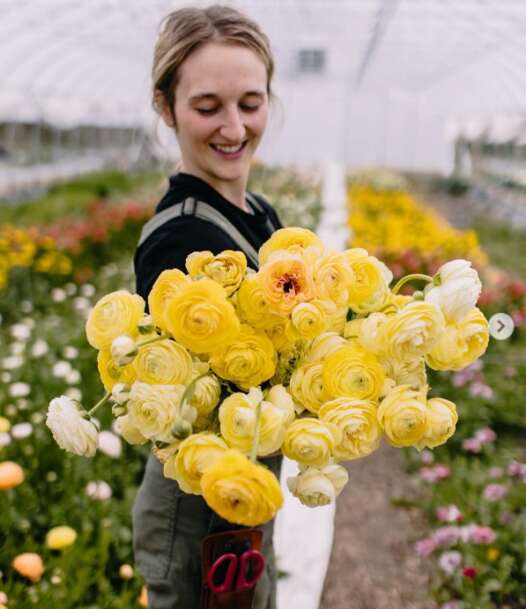
The Land Conservancy of McHenry County is hosting a Learning Circle for women farmland owners at Teshuva Fields Flower Farm and Tsedah Farms in Crystal Lake June 17. | Courtesy Teshuva Fields Flower Farm and Tsedah Farms

By The Land Conservancy of McHenry County

Women who own or manage farmland or who have an interest in farming are invited to a Learning Circle hosted by The Land Conservancy of McHenry County.

The Learning Circle will be held Tuesday, June 17 from 9 a.m. to 2 p.m.

The day will start with tours at neighboring farms Teshuva Fields Flower Farm and Tsedah Farms, 2708 Walkup Road in Crystal Lake, and transition to the Rotary Shelter at Veteran Acres Park, 431 Walkup Road in Crystal Lake, for lunch and discussion.

Participants can register at ConserveMC.org/women-farmland-owners/ or email chodge@conservemc.org. The event is $5 per person. Morning refreshments and lunch are included. The deadline to register is Monday, June 16.

This Learning Circle will focus on topics such cut flower production, native flower and shrub integration, diversified market gardens, high tunnels and more.

Nearly half of all farmland in Illinois is owned or co-owned by women, and many women manage farmland on their own.

The event is open to women with all levels of experience, whether they are actively managing a farm, or they have recently inherited a farm and are learning about how to run a sustainable operation.

The Learning Circle will provide women the opportunity to meet other landowners, share their farm successes and challenges, discuss goals for their land, and get advice and technical assistance.

The Land Conservancy is a nonprofit organization dedicated to the health and preservation of natural and agricultural land in McHenry County.

Read Full Post »

Our Zoning Board of Appeals will be holding public hearing this evening beginning at 6:30 PM. Topics on their agenda include:

Public Hearing

Text Amendment – Definitions 5-2-1, Solar Energy Regulations 5-3-15, Energy System Removal 5-3-17

Public Meeting

[Vote] Text Amendment – Definitions 5-2-1, Solar Energy Regulations 5-3-15, Energy System Removal 5-3-17 Recommendation

A copy of their agenda can be viewed and downloaded here.

Read Full Post »

« Newer Posts - Older Posts »