Feeds:
Posts
Comments

Archive for the ‘Chicago Sun*Times’ Category

A plan to let terminally ill people end their own lives stalled in the final hours of the spring legislative session. | Mitchell Armentrout/Sun-Times

By George Wieb | Chicago Sun*Times

SPRINGFIELD — After fierce pushback and a narrow vote of support in the Illinois House of Representatives, lawmakers ended their spring session without approving a bill that would let terminally ill people end their own lives.

The House had approved the measure Thursday with just three votes to spare to get it passed. But shortly after that vote, Cardinal Blase Cupich, the archbishop of Chicago, issued a rare statement, condemning the plan as “assisted suicide.”

State Sen. Linda Holmes, D-Aurora, the lead sponsor of the measure, said the Senate ran out of time this legislative session to get the bill over the finish line.

It could still be called for a vote at a later date.

The bill drew pushback from several groups, including the Catholic church.

It remains unclear where Democratic Illinois Gov. JB Pritzker stands on the proposal. A spokesman for Pritzker said he would only comment on the bill if it landed on his desk.

Under the legislation, patients with a prognosis of six months to live or less would be able to obtain a prescription for life-ending medication they would have to administer themselves.

More here.

Related: WATCH: Assisted suicide legislation stashed in food preparation bill

Read Full Post »

Electric bills are about to jump by an average of $10.60 a month due to increased power demand across the country. A consumer organization also blames the electric grid operator. | Pat Nabong/Sun-Times file

By Brett Chase | Chicago Sun*Times

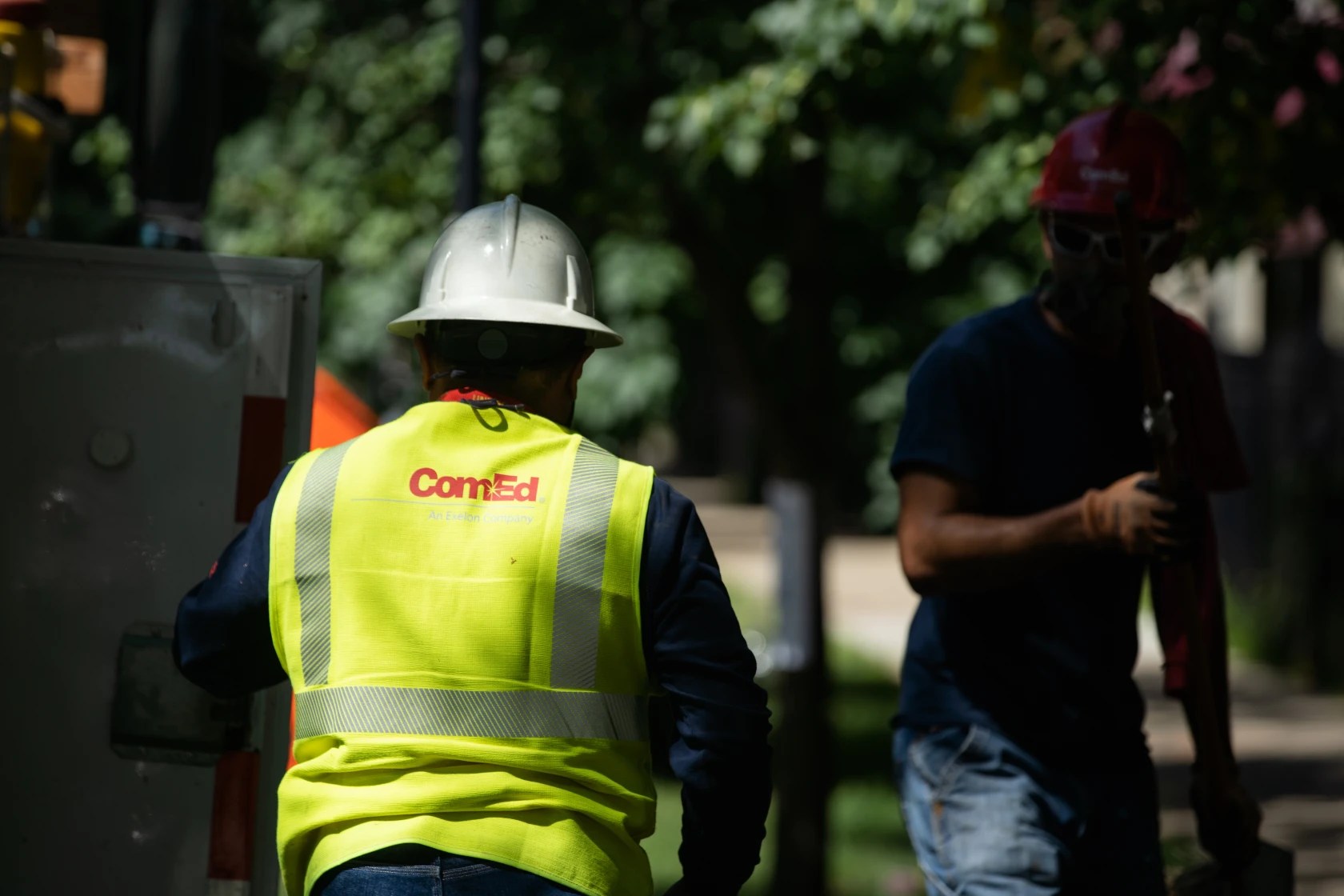
ComEd customers are about to see a big spike in their electric bills.

As the Chicago Sun-Times reported in November, the demand for power from big data centers and a delay in connecting new power sources, such as solar and wind, to the electric grid is resulting in ComEd customers seeing their monthly bills go up $10.60 a month on average.

Most customers won’t see this increase until their July bills are delivered, a spokesperson for the utility said. The higher prices may remain until May of next year.

Power demand across the country has skyrocketed as big data centers and artificial intelligence operations have created huge demand. Meanwhile, new sources of renewable energy, including wind and solar power, have been slow to get connected to an electric grid that spans from Northern Illinois to the East Coast, said Jim Chilsen, a spokesperson for the consumer watchdog Citizens Utility Board.

“Those generators could bring down prices,” Chilsen said of the solar and wind projects.

Coal plants in Illinois and across the country have been closing, and the state has promoted cleaner renewable sources under a 2021 law aimed at fighting climate change. The problem is that new renewable energy isn’t getting connected fast enough to meet surging demand at the very time older sources of power, such as coal, are being shut down.

Chilsen blamed policies set by the electric grid operator, an organization known as PJM, for the difficulty bringing renewables on line.

“Of course data centers that drive up demand play a role,” Chilsen said, “but the No. 1 reason is poor policy.”

State lawmakers also need to pass legislation that will help get renewable energy projects up and running, he added.

Read more here.

Read Full Post »
Kris Bachtell, The Morton Arboretum’s vice president of collections and horticulture, strolls through one of the center’s Quonset huts where plants are being readied for the Arbor Day Plant Sale. | Anthony Vazquez/Sun-Times

By  Stefano Esposito | Chicago Sun*Times

The long, low-slung hut without windows and a gun-metal gray door with only the number “12″ to identify it, looks like it might hold a closely guarded military secret.

Military? No. A secret? Yes, sort of — at least until April 24.

Kris Bachtell opens the door, and inside are hundreds upon hundreds of plants — in startling colors: a metallic purple and a neon-bright chartreuse. In another hut, a plant with a yellow-and-peach flower that resembles the most delicate origami creation.

The coral bell shrubs and the paper-like barrenwort are among the approximately 36,000 mostly perennial plants that The Morton Aboretum will have on sale during its annual three-day Arbor Day Plant Sale. Billed as “one of the largest seasonal plant sales in the Chicago region,” the arboretum is offering their plant “geniuses” for gardeners who might need a little advice.

Morton Arboretum Arbor Day Plant Sale
When: April 24 – 26
Where: Morton Arboretum, 4100 Illinois Route 53, Lisle
Tickets: $32 (includes general admission and a $15 purchase voucher)
Info: mortonarb.org

For now, the plants are maturing in 10 Quonset huts. They’ll soon be hauled out on carts to a 38,000-square-foot facility for the sale, which runs April 24-26.

The plants are all designed to handle Chicago weather, including about 30 varieties of tomatoes.

Bachtell, Morton’s vice president of collections and horticulture, and Sharon Yiesla, Morton’s plant knowledge specialist, took a Chicago Sun-Times reporter and photographer on a recent preview tour.

Purple Heuchera, or coral bells, are part of the Arbor Day Plant Sale at The Morton Arboretum. | Anthony Vazquez/Sun-Times

Read more here.

Read Full Post »

Illinois Republican lawmakers sent a letter* to the Illinois High School Association asking it to explain how for its plan to amend policy to adhere to Trump’s executive order aimed at “keeping men out of women’s sports.” | Kirsten Stickney/For the Sun-Times

By  Violet Miller | Chicago Sun*Times

Trans athletes can continue to participate in high school sports competitions, the Illinois High School Association said this week as it affirmed its current policy in the face of demands to exclude trans athletes by the Trump administration and Illinois Republican lawmakers.

President Donald Trump issued an executive order in February aimed at “keeping men out of women’s sports” and threatened to withhold federal funding from schools that didn’t do as he wanted. His administration this week sued Maine for not complying.

The IHSA’s announcement came in a letter issued to Republican lawmakers. It said that Attorney General Kwame Raoul and the Illinois Department of Human Rights had informed the agency that it was required to maintain a policy in lockstep with state law. It also clarified that its trans athletes policy only applied to the state series competition it sponsors, and that individual schools could determine whether transgender students participated during the regular season.

“Compliance with the Executive Order could place the IHSA out of compliance with the Illinois Human Rights Act and vice versa,” IHSA Board President Dan Tulley and Executive Director Craig Anderson wrote in a statement. “The IHSA simply desires to comply with the law and takes no position on which of the foregoing is correct. Given the conflict described above, however, we are left in an untenable position.”

Illinois law prohibits discrimination based on gender identity, requiring schools to protect transgender students’ right to use facilities and participate in events and programs that match their gender identity.

Read more here.

*The letter Illinois Republican lawmakers sent to the Illinois High School Association can be found here.

Read Full Post »

Under proposed legislation, Illinois would explore the viability of reducing reliance on the state’s gas tax by putting in place a “road usage charge,” essentially a tax on the number of miles driven. | Tyler Pasciak LaRiviere/Sun-Times

By George Wiebe | Chicago Sun*Times

Funding worries: As vehicles become more fuel efficient and electric vehicles make greater inroads, Illinois faces an unexpected consequence — less funding for roads. The motor fuel tax helps pay for road, bridge and public transit improvements throughout Illinois. Now, though, vehicles require less gas — or no gas at all — so funding for infrastructure has taken a hit.

Proposed fix: Legislation proposed by state senators Ram Villivalam (D-Chicago) and Christopher Belt (D-East St. Louis) takes aims at the problem by creating a pilot program to explore the viability of establishing a “road usage charge,” essentially a tax on miles driven.

How it would work: To track and report mileage, some drivers could have a transponder on their car, though motorists also could be allowed to send a photo of their odometer to IDOT.

Read the full story here.

Read Full Post »

Former Illinois House Speaker Michael Madigan walks through the Dirksen Federal Courthouse. | Tyler Pasciak LaRiviere/Sun-Times

By Jon Seidel, Tina Sfondeles and Dave McKinney | Chicago Sun*Times

‘Like bandits’: Just minutes into Assistant U.S. Attorney Amarjeet Bhachu’s highly anticipated cross-examination Monday of former Illinois House Speaker Mike Madigan, prosecutors played a recording that’s been allowed into the trial only because of testimony Madigan gave last week. The recording shows Madigan laughing as he tells his ally, Michael McClain, that certain ComEd contractors had “made out like bandits.”

Prosecutor’s highlights: Madigan testified last week that he thought he’d sent a message to then-Ald. Danny Solis that he wouldn’t be part of a “quid pro quo.” But Bhachu cited at least five other examples of Solis suggesting such an arrangement.

Meet the prosecutor: Bhachu is a 20-year veteran of Chicago’s U.S. attorney’s office. He participated in the historic “Family Secrets” mob prosecution and faced off with gangsters such as Frank “The German” Schweihs and Michael “The Large Guy” Sarno. Now, Bhachu is chief of the office’s Public Corruption and Organized Crime Section.

What’s next: U.S. District Judge John Blakey signaled to jurors that all sides could finish presenting evidence by the end of this week, after roughly three months of trial — with the potential for closing arguments to begin as soon as Jan. 22.

Read more here.

Read Full Post »

« Newer Posts